By Florence Westergard
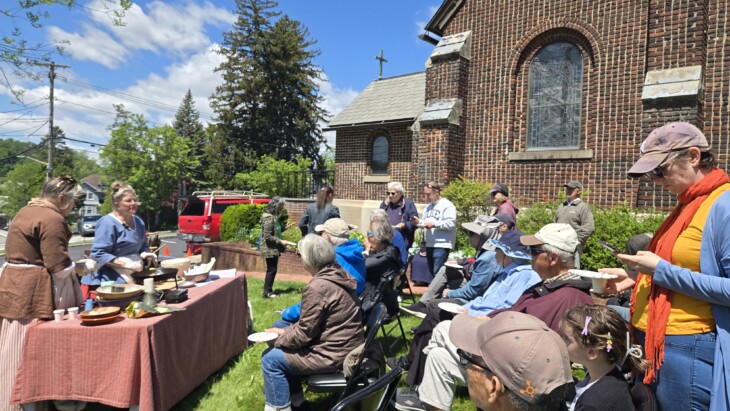
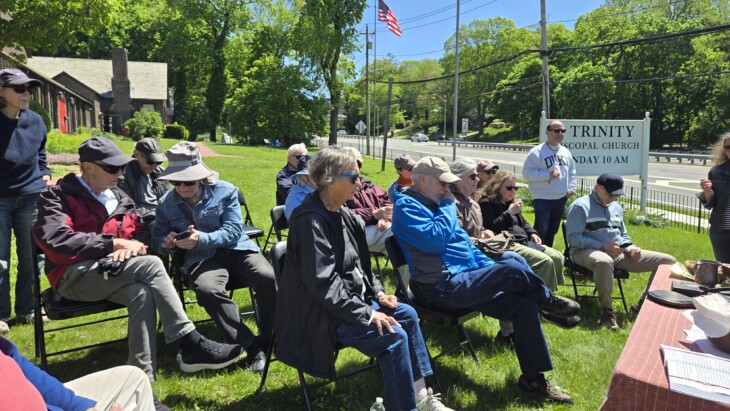
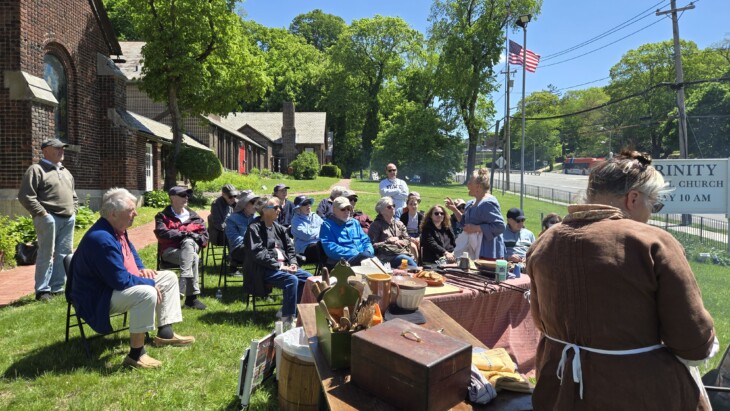
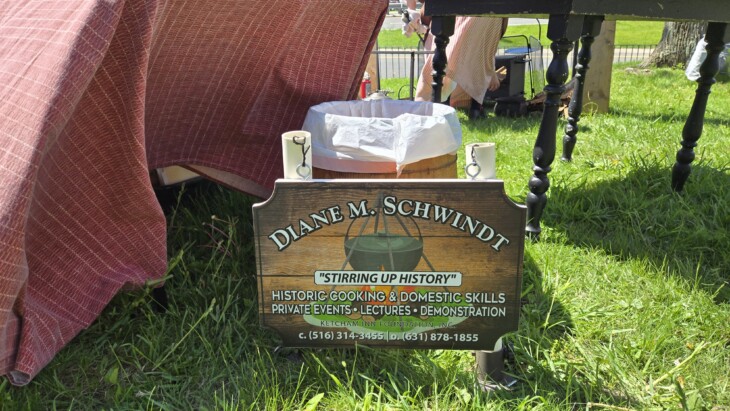
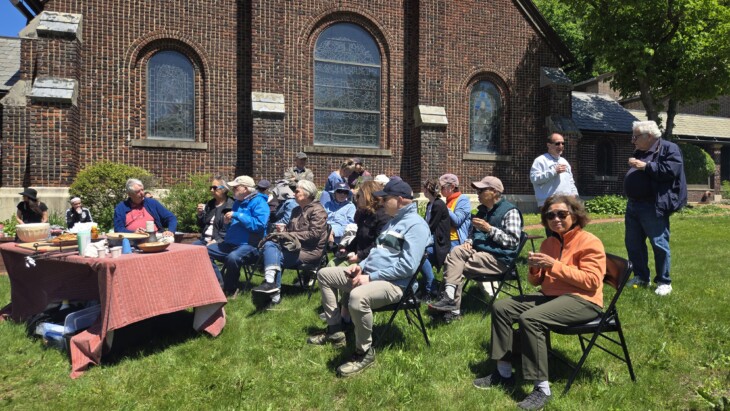
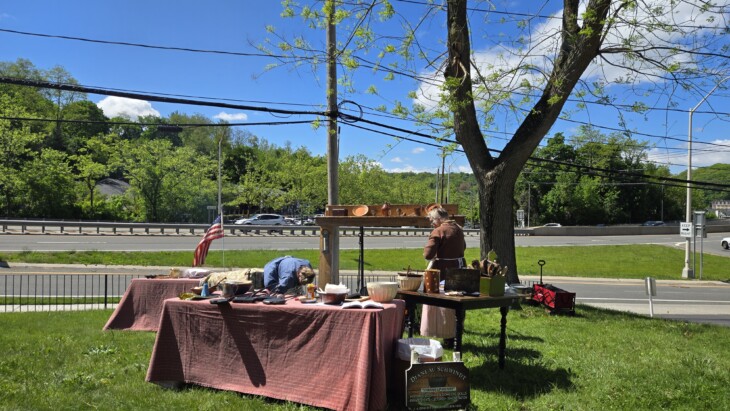
On Saturday, May 10, a breezy but beautiful spring day, the Roslyn Landmark Society was delighted to host a live demonstration of historic hearth cooking by Diane Schwindt, resident cook at the Ketcham Inn and a passionate food historian. The event, originally scheduled two weeks earlier but postponed due to rain, brought the community together to experience the sights, smells, and tastes of the 18th century.
Executive Director Jaime Karbowiak welcomed attendees with thanks for their flexibility, noting, “We’re so glad you’re here—even with a little wind, it’s a gorgeous day. And we’re thrilled to welcome back Diane Schwindt, who presented last year at the Bryant Library. This year, she brings us something even more special: a live demonstration of colonial-era cooking, focusing on the time when George Washington visited our area.”
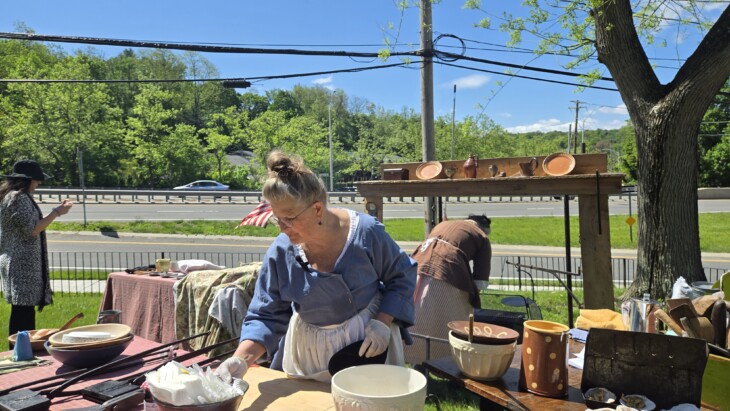
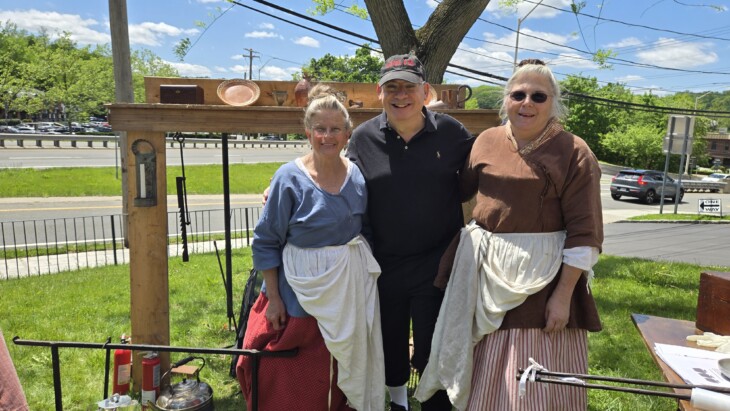
Diane began by sharing how her work as a historian and cook led her to uncover the foodways of early America. With the help of her assistant, Danielle, she transported the audience back to 1790, when George Washington famously visited Roslyn and enjoyed breakfast with the Onderdonks, a local Dutch family.
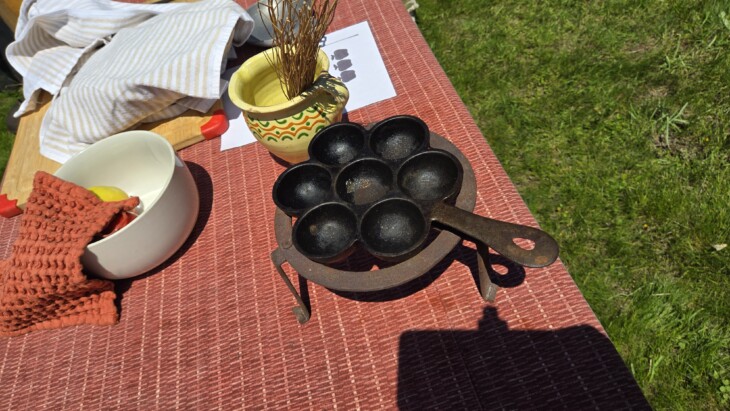
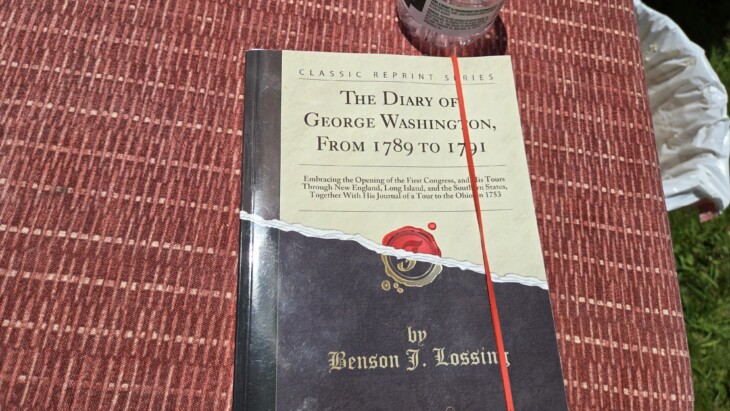
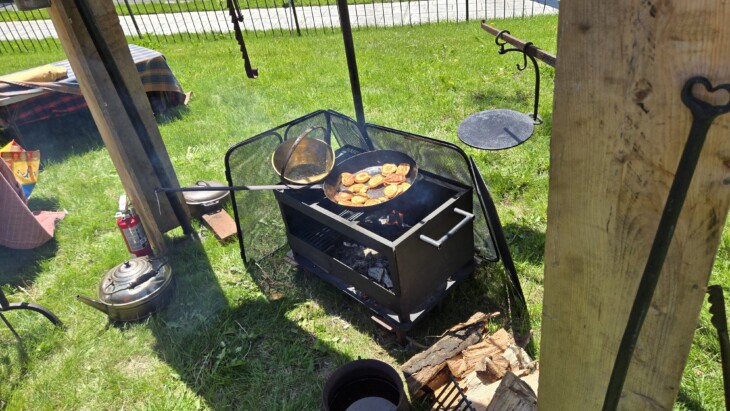
What might Washington have eaten that morning? Schwindt’s research, rooted in primary sources like Washington’s own diary, paints a vivid picture: Dutch treats like Aebleskivers—small, round donuts cooked in buttered pans and flipped with knitting needles—were likely served. Diane prepared some ahead of time due to the weather and heated them fresh on site, offering guests a delicious taste of history.
She also demonstrated hoe cakes, a Washington favorite. Made from cornmeal and closely related to “johnny cakes,” hoe cakes were traditionally cooked on a hoe or griddle over an open flame and generously topped with butter and honey. To connect the dish more deeply to Roslyn's local history, Diane noted that the Onderdonk family operated Roslyn's grist mill, making flour and cornmeal readily available to them. She even brought a hand mill to show how labor-intensive daily grain grinding would have been—often delegated as the job of a child in the household.
Dairy also played a critical role in 18th-century kitchens. Diane explained how families churned butter by hand, washed it meticulously in wooden bowls (often misidentified today as salad bowls), and used the remaining milk to make cheese. Hard cheeses, she noted, were essential protein sources during the winter months when fresh meat was scarce.
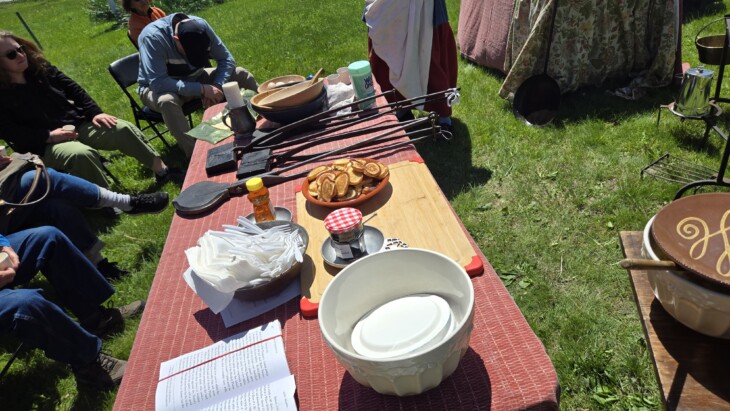
Among the day’s most captivating artifacts was an 18th-century waffle iron, believed to be similar to one given to Martha Washington as a wedding gift. Waffles—cooked directly over the fire—were a popular treat, especially during festive “waffle frolics” Washington enjoyed. Diane treated guests to fresh waffles, alongside tea brewed from Bohea, a smoky black tea imported by the Dutch East India Company and favored by the Washingtons.
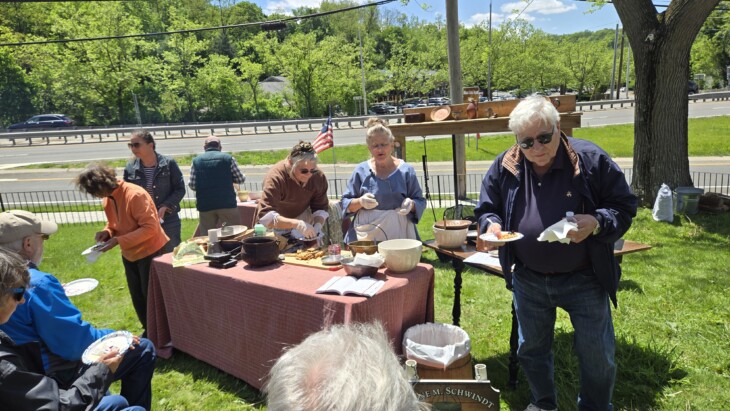
As the audience sipped their tea and sampled waffles and Aebleskivers, Diane discussed other aspects of 18th-century kitchen life: open hearth cooking methods, the role of cranes and trammels for moving pots in and out of the fire, and the heavy wool and linen garments worn by women working near open flames. Safety, practicality, and resourcefulness were central to daily life.
She also highlighted the social and spiritual significance of food traditions, such as the breaking of bread—a practice with origins in Jewish Shabbat and later Christian communion rituals. Tools like wafer irons were used to make both everyday wafers and religious communion bread.
Diane’s immersive, interactive program ended with tastings of hoe cakes, waffles, Aebleskivers, and Bohea tea, allowing attendees to literally savor the past. Her deep knowledge and passion brought the colonial kitchen to life and gave all who attended a richer appreciation for the ingenuity, labor, and culture that shaped early American cuisine.
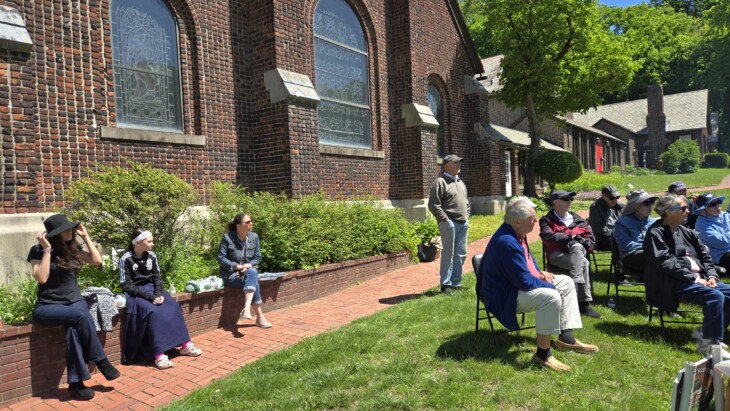
The Roslyn Landmark Society thanks Diane Schwindt and her assistant Danielle for bringing this exceptional program to our community—and to all who joined us on May 10th to explore, taste, and celebrate history. A special thanks also to Trinity Episcopal Church for graciously allowing the demonstration to take place on their lawn.


0 Comments