Are you in search of hiking areas near Roslyn to exercise in the time of the COVID-19 pandemic? Here is the first in a series of historic hikes that are safe and fun to explore.


The first in the series is Muttontown Preserve located on Jericho-Oyster Bay Road, south of Northern Boulevard. Owned by Nassau County, the preserve is on the former 150-acre Knollwood Estate originally owned by stockbroker Charles Hudson and later purchased but never occupied by King Zog of Albania. The fun part of the hike is trying to find the mansion and gardens ruins. Part your automobile at the Muttontown Preserve Equestrian Center and use the above maps.


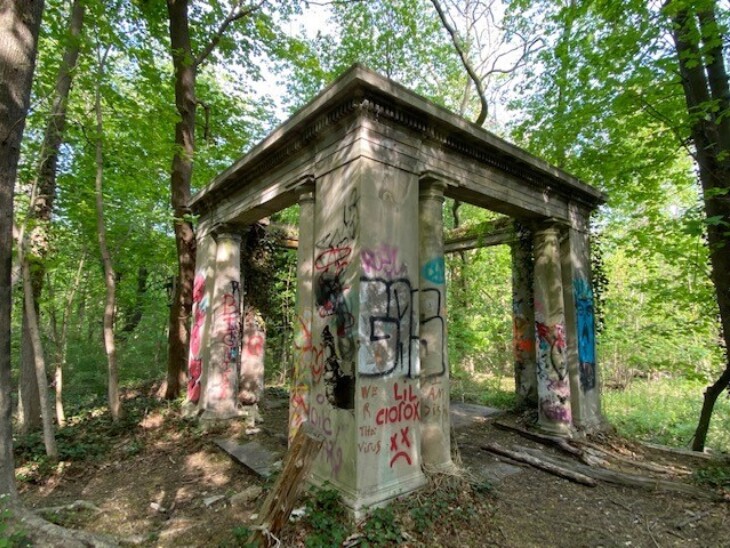
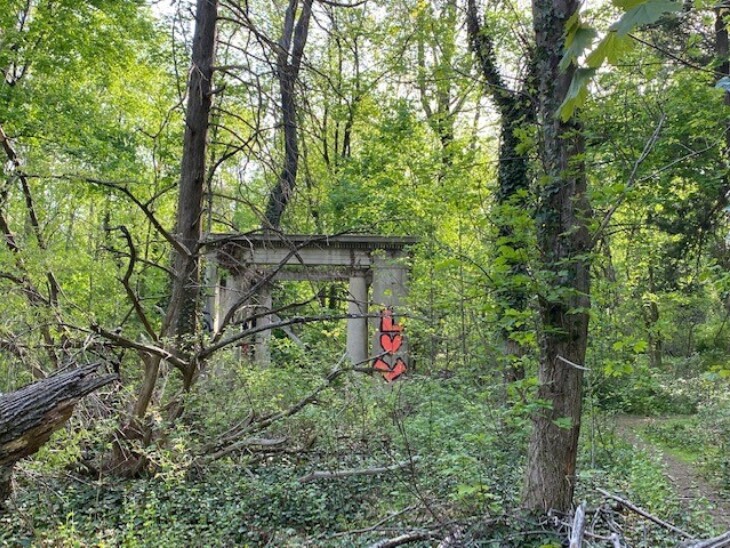
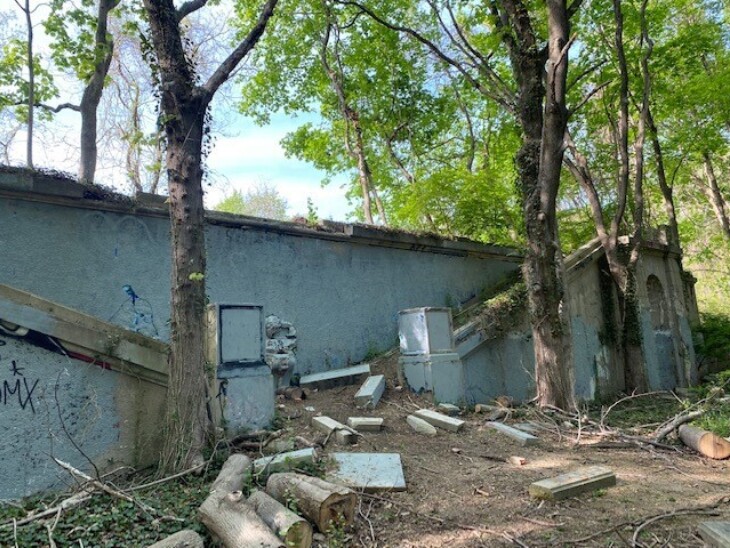
See if you can find these ruins during your hike.
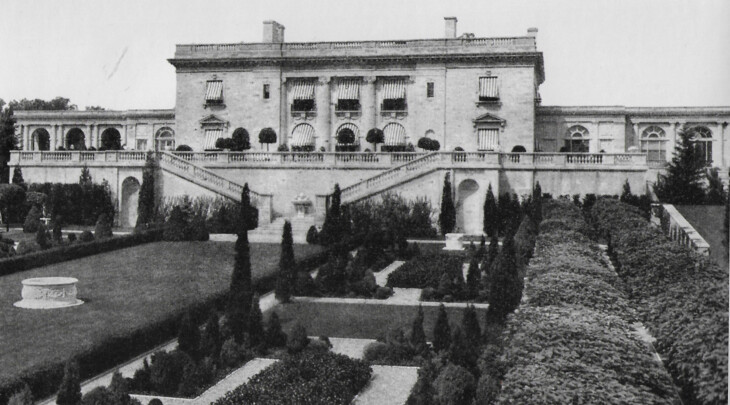
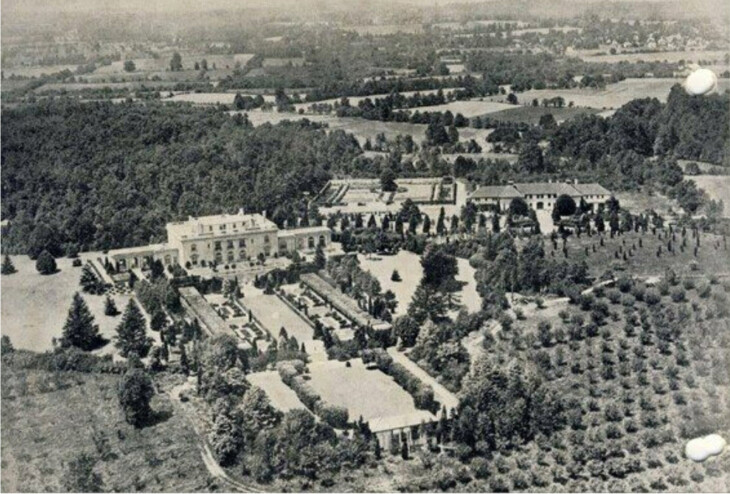
When Knollwood was in its glory.
__________________________________________________________
Movie scout Nick Carr's 2013 post on his trip to the Muttontown Preserve
Stumbling On The Abandoned Ruins Of King Zog’s Long Island Estate
Posted by: Scout March 4, 2013 98 Comments
I’ve recently been scouting around the Syosset area of Long Island, and have frequently found myself driving north on 106.
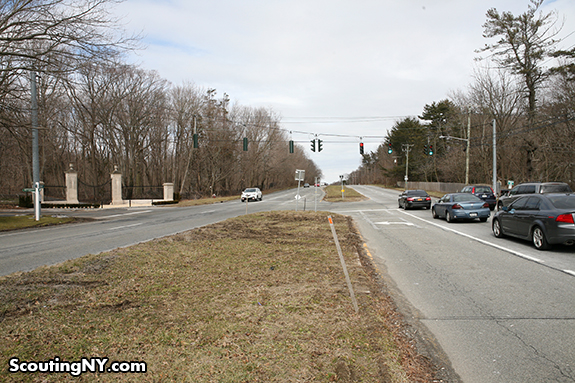
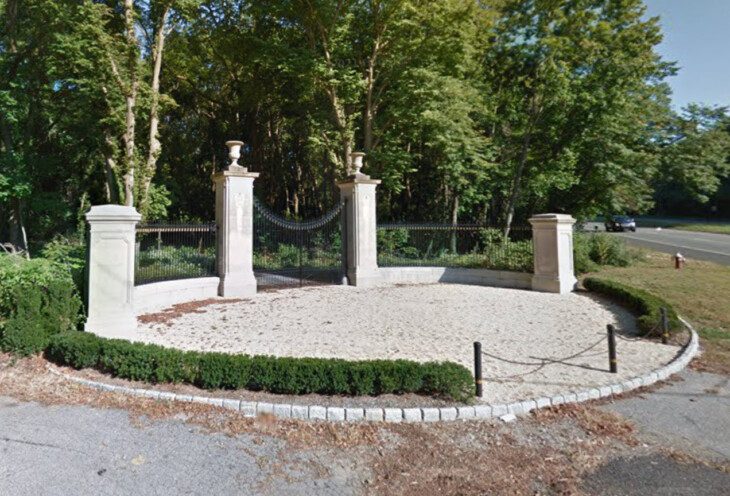
And, every time I do, I’ve noticed these gates – clearly the entrance to an estate of some kind:

But why was there a chain across the front?
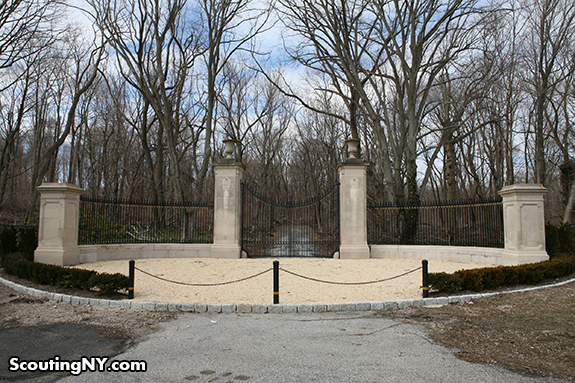
Curiosity finally got the best of me and I pulled over to have a closer look.

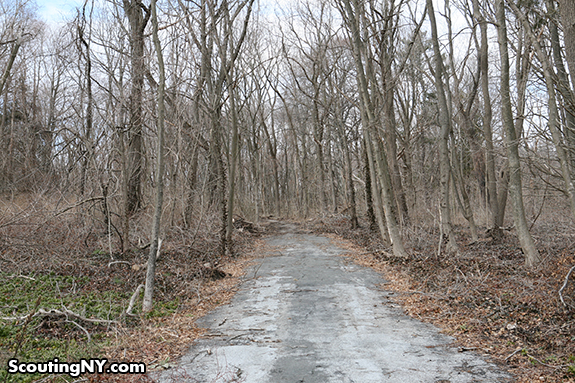
Looking through the gate, it was pretty clear no one had used the entrance in quite a while, as the road beyond was cracked and overgrown, disappearing into the forest.
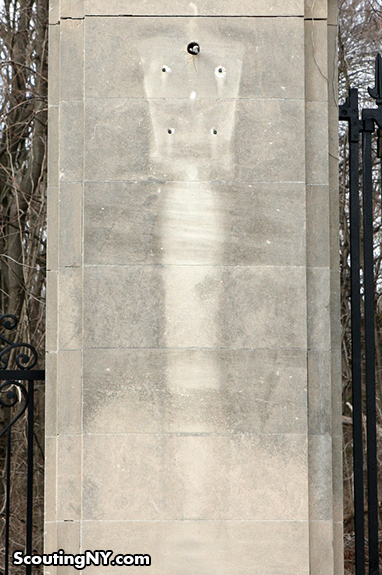
Also, you could see the outline of two torches that used to adorn the pillars:
So what was the story? Not wanting to trespass, I did some research later on and discovered that the dilapidated road through those gates would have once brought visitors here:
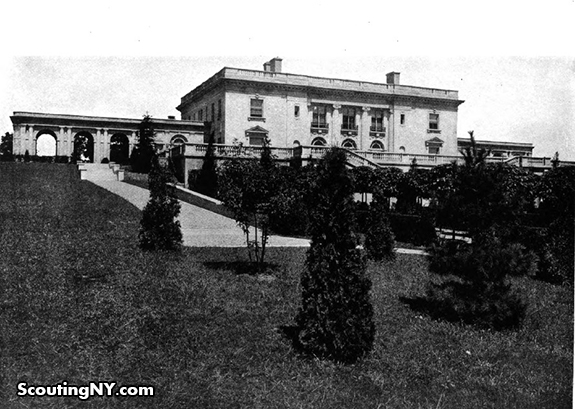
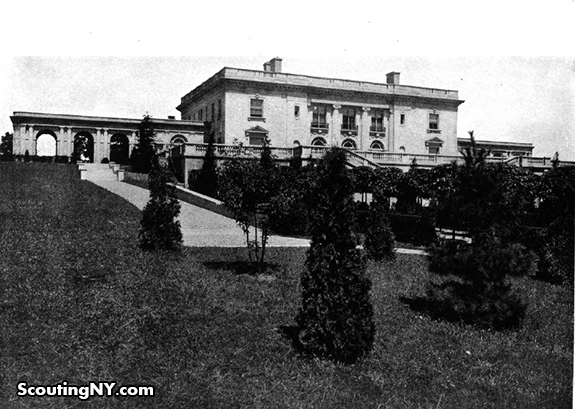
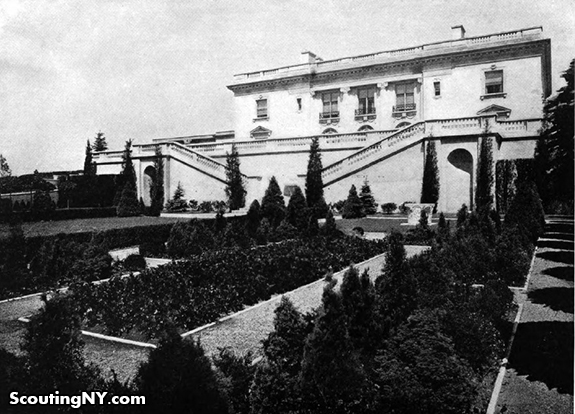
This is Knollwood Estate, a Gold Coast-era mansion built for steel tycoon Charles Hudson between 1906 – 1920.
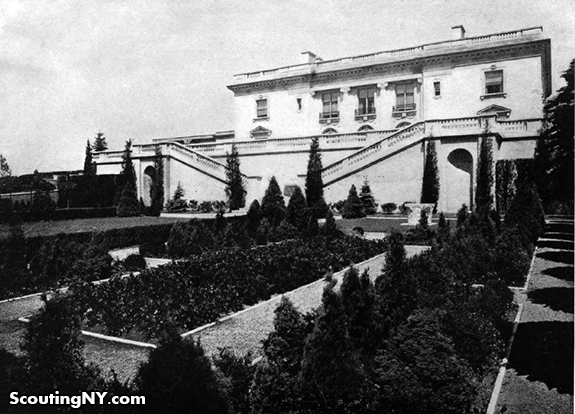
The mansion had 60 rooms and was set on a 260-acre property. These pictures were taken in 1911 for Architecture magazine.
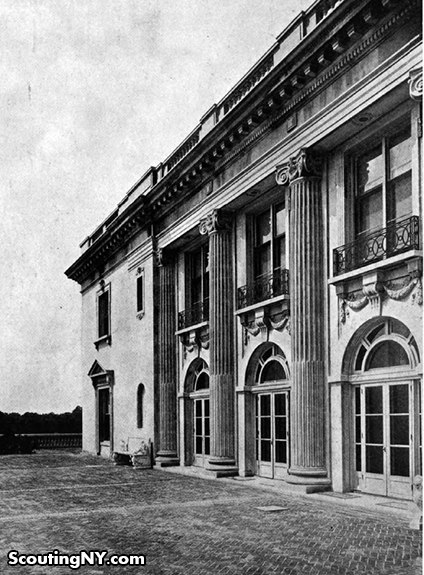
However, people more commonly refer to the property as King Zog’s estate. Who was King Zog?
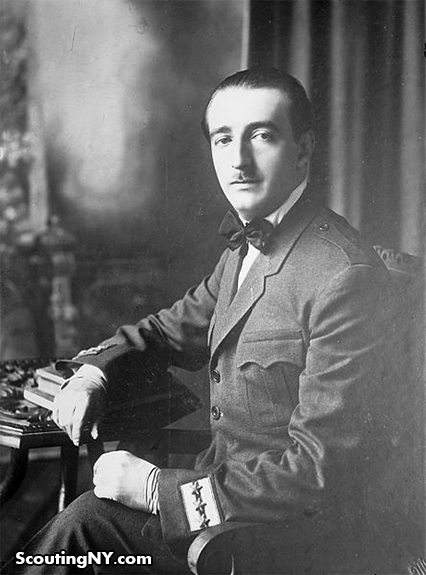
Ahmet Muhtar Bej Zogolli, or Zog I, was the ruler of Albania from 1922 to 1939. After being ousted by Mussolini, Zog and his family fled to England. Plans were made to relocate to the United States, and in 1951, Knollwood was purchased for their new home, at a cost of $102,800.
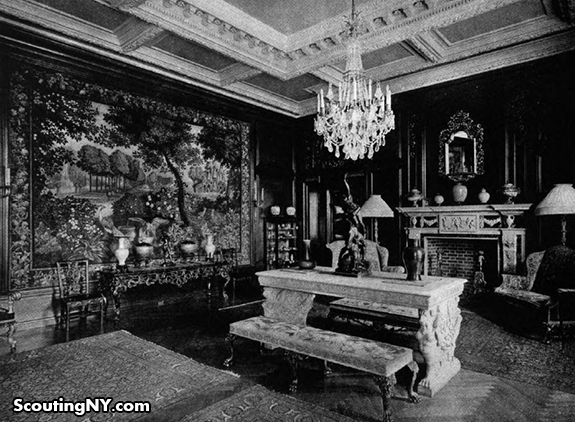
Though Zog originally planned to use the estate as a satellite of Albania, complete with Albanian subjects at his disposal, he never moved in, and Knollwood fell into disrepair. Vandals soon descended on the property in search of treasure supposedly hidden by Zog in its walls, and the conditioned worsened. It was sold in 1955, and finally torn down in 1959.
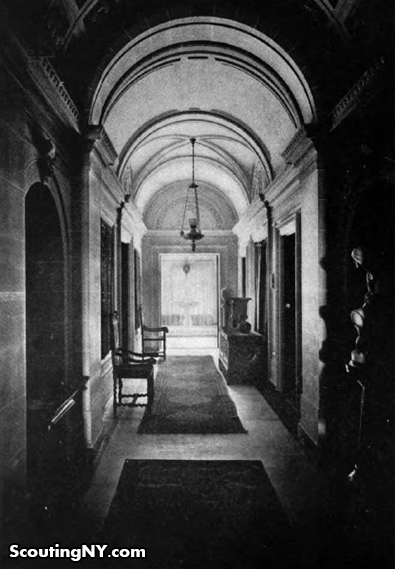
Well, mostly torn down – today, the ruins of the Knollwood Estate lie in the Muttonwood Preserve. I decided to hike out to find them.
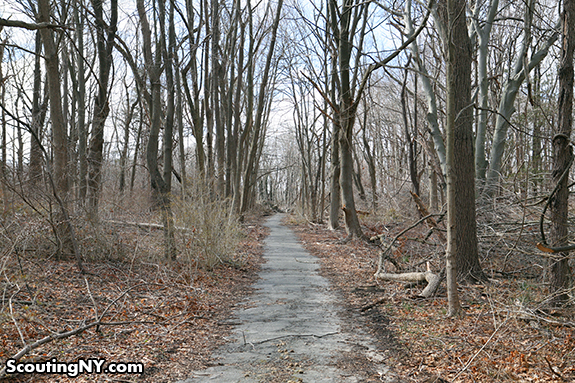
Er, it took a little longer than expected, as the trails are really poorly marked, and I kept getting lost in the woods. But after a bit of backtracking and bushwacking, I managed to find the path leading to the estate.

This is Knollwood in 1911:
This is Knollwood today:
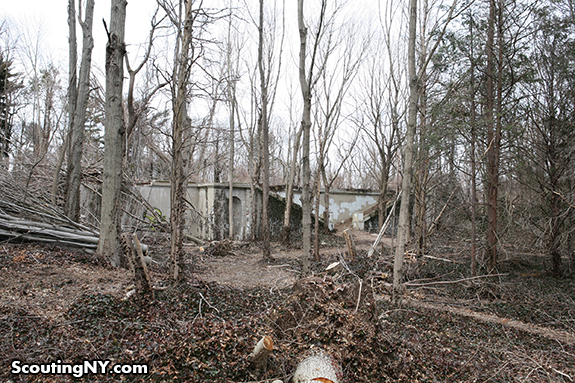
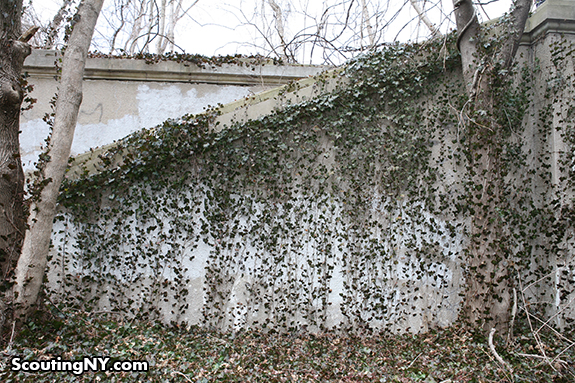
The most substantial remaining structure is the grand-double staircase…
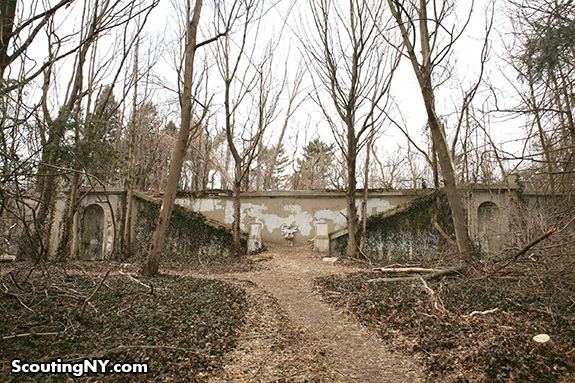
…which the mansion once sat atop:
Vines now grow down the sides, which actually feels appropriate for its former splendor:
Two alcoves are positioned on either side, visible in the above historical pictures:

The stairs meet at what I think was once a fountain…
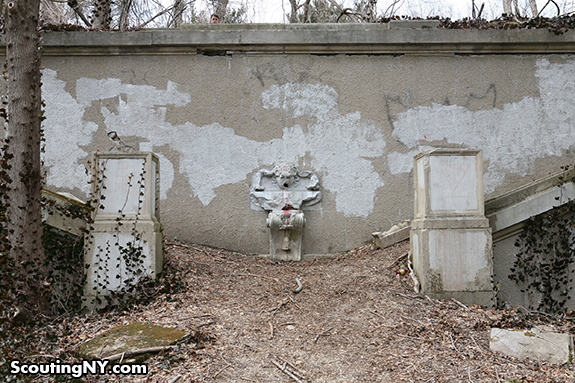
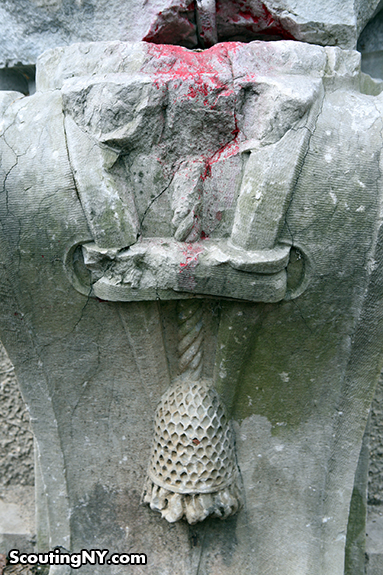
Vandals have not been kind:

I love how angry the face is – almost like she’s infuriated at the state of the property:
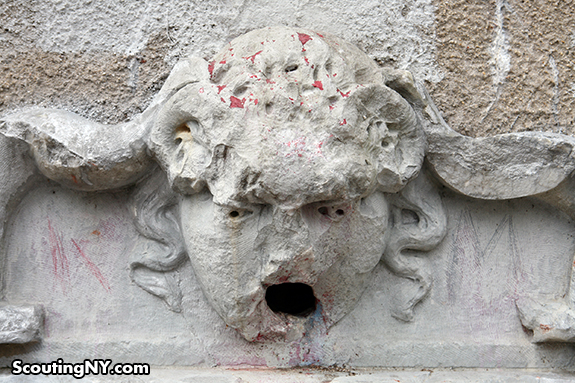
The lower half – almost looks like candle wax (oh, how I wish I had stumbled upon a bunch of Long Island Satanists worshipping around a candlelit altar here):
The stairs are completely covered over by dirt. I tried digging down to see if any steps remain, but couldn’t get very far without a shovel:
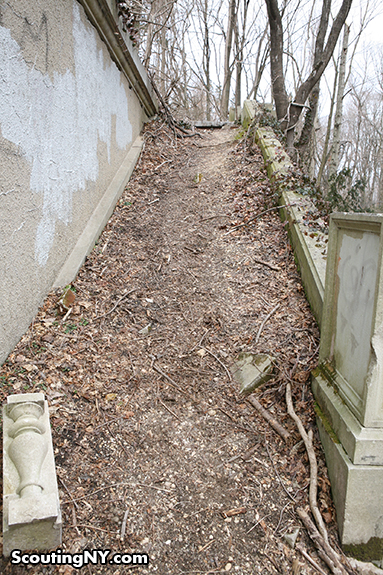
The opposite staircase, littered with chunks of the estate:

I headed upstairs to where the mansion would have been…
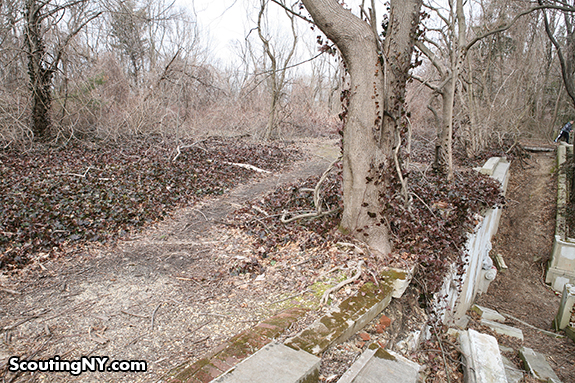
…but found only overgrowth:
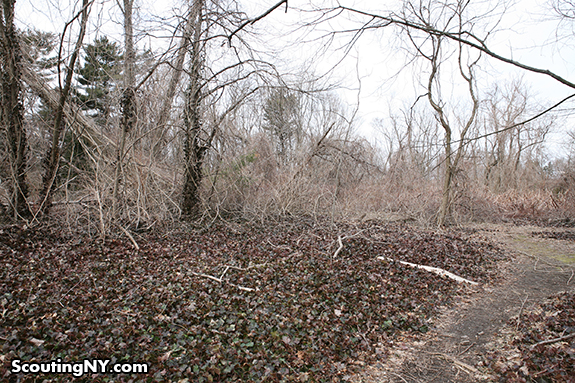
There’s a clearing a little ways in, but they did a pretty good job of removing all traces of its existence:
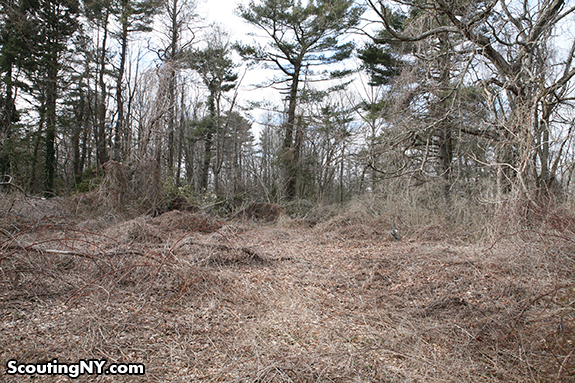
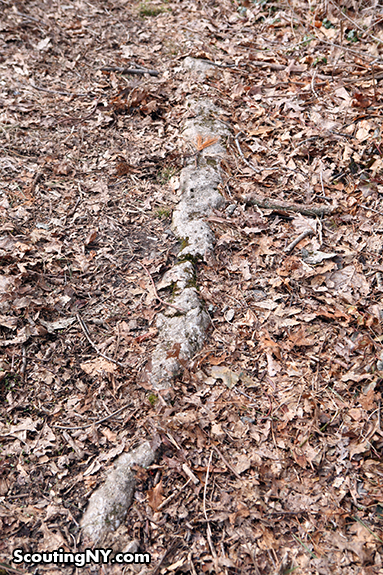
Still, I love the curious remnants that persist, like this stone line running around the property. The more I kept digging around it, the more it continued:
Originally, the patio was made of brick:
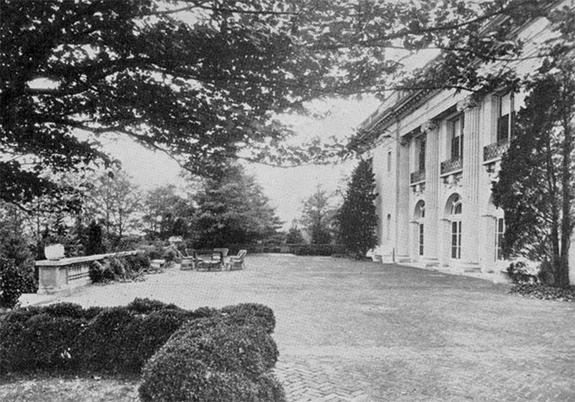
Photo from the Society for the Preservation of Long Island Antiquities – click for many more via OldLongIsland.com
Brickwork can still be found below the dirt:
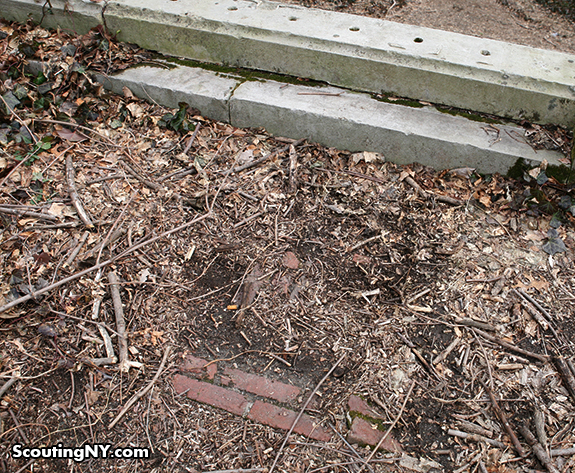
One of the few remaining balustrades:

A pillar, open at the side where a balustrade would have connected.
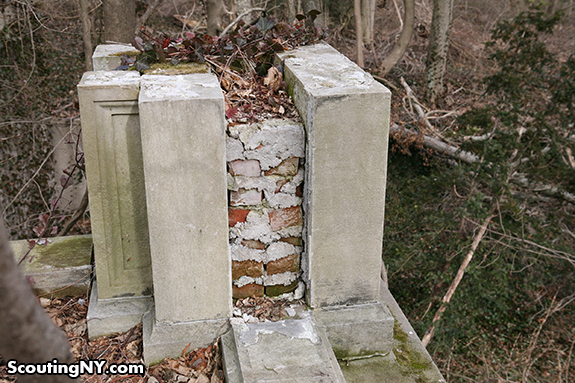
Today, the view off the balcony is not particularly impressive:
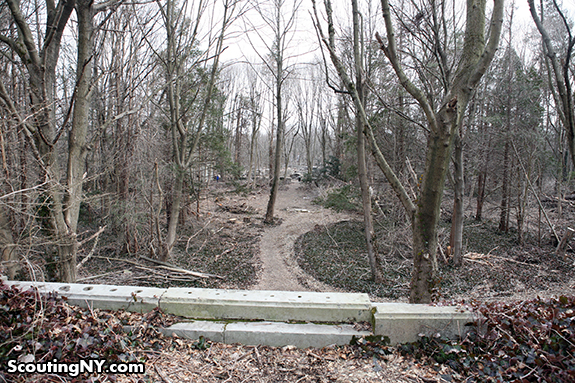
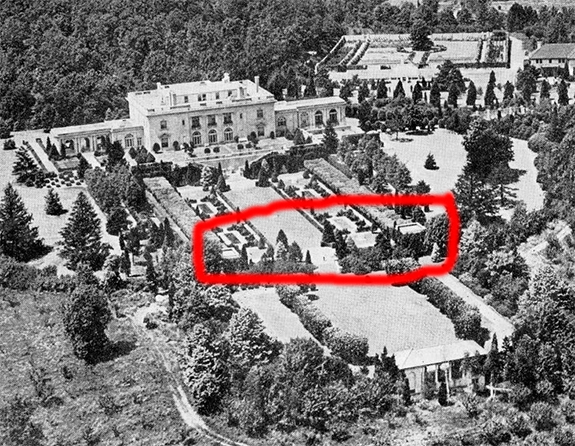
But had you been standing here a hundred years ago, you would have seen three tiers of lush gardens stretching out, as pictured in this 1950s aerial shot:

Photo from the Society for the Preservation of Long Island Antiquities – click for many more via OldLongIsland.com
Fragments of these gardens can still be found. For example, a marble basin was positioned about midway down the center lawn:
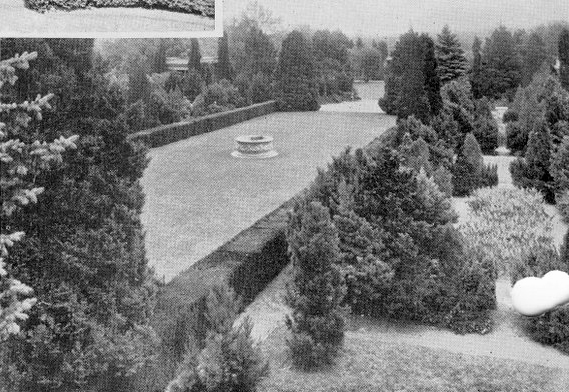
Photo from the Society for the Preservation of Long Island Antiquities – click for many more via OldLongIsland.com
The platform for the basin is still in place (the actual basin was moved to the Nassau House mansion):
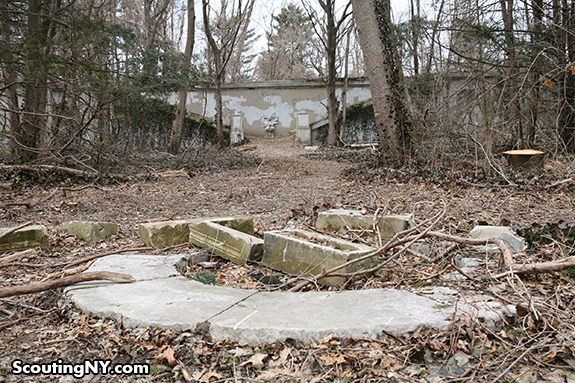
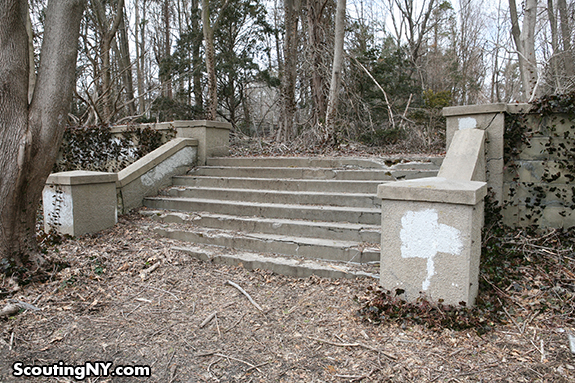
Continuing on, you come to a staircase flanked by two columned structures:
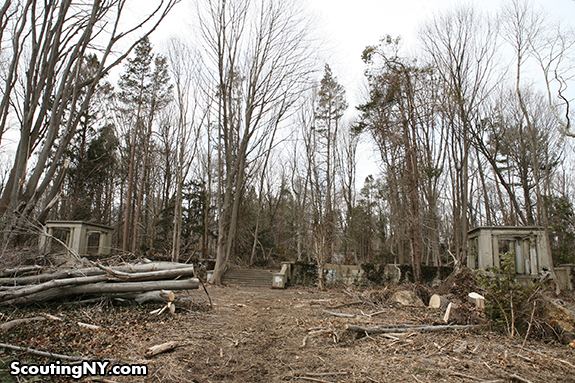
These can be seen in the aerial shot, dividing the two gardens:
The staircase is still largely intact:
The eastern structure:

Sadly, much of it is crumbling:
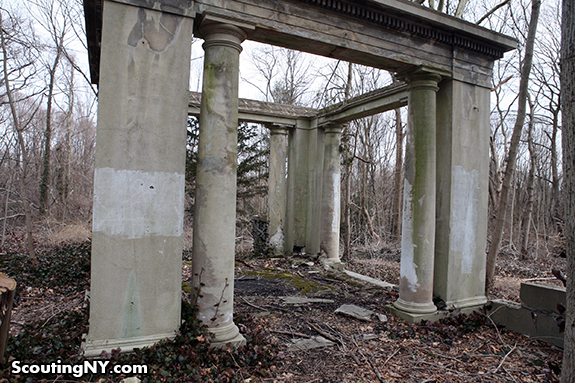
It looks as though something was originally positioned in the center:

The western structure is in far worse shape, with chunks of cement literally dangling:
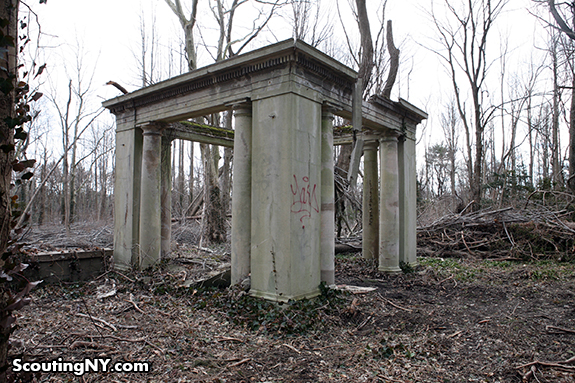
But one neat surprise remains: the original tilework, now mostly covered by dirt:

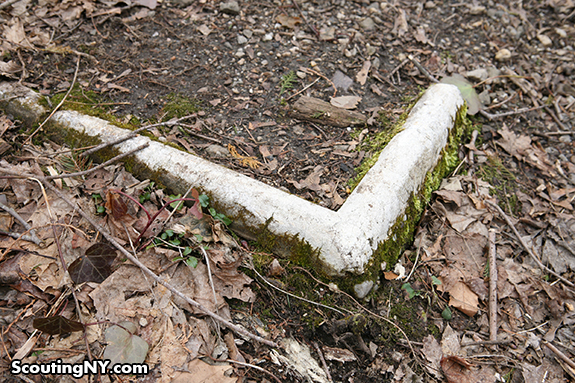
Another one of those “I wonder what this once was” bits…

A marble corner…but to what?
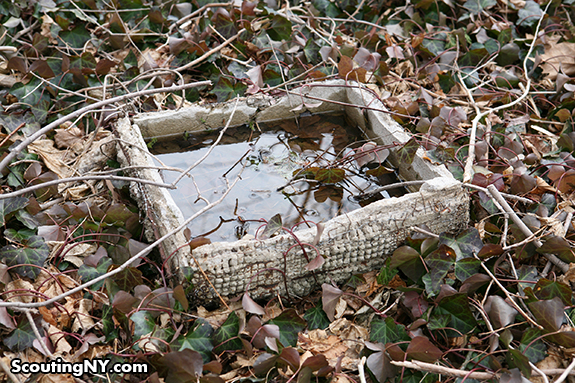
An old plant potter, hidden in the brush:
I found one last structure at the farthest end of the property:

The top consists of an unidentified something resting on a circle of bricks:
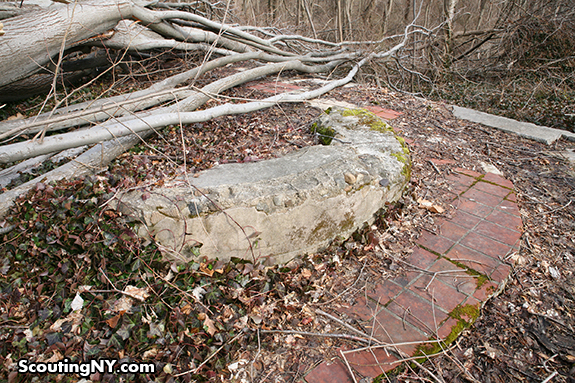
The structure is sunk in the ground…
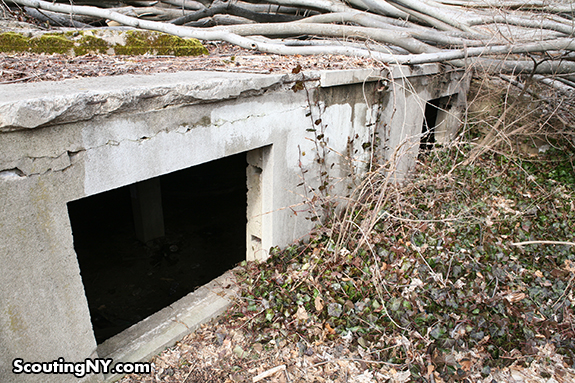
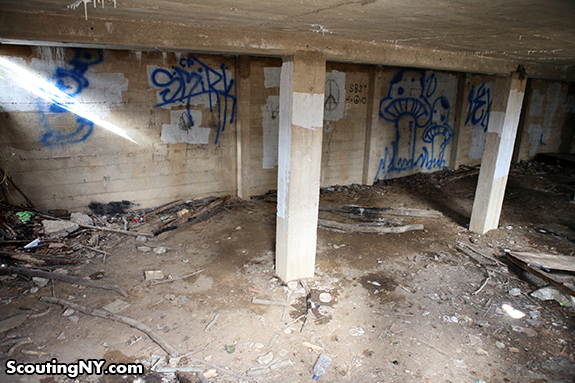
…and actually is pretty large inside – perhaps a storehouse of some kind?
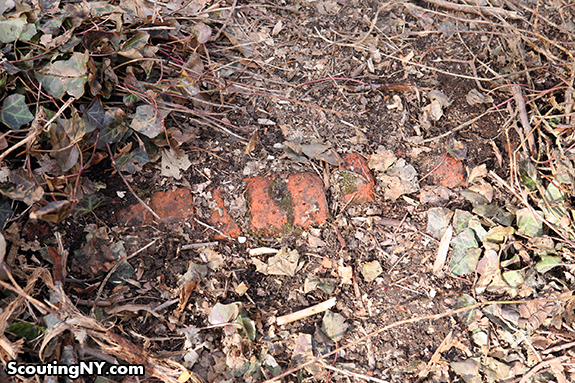
Just beside it, I found this row of bricks. I started digging in the dirt, and the bricks kept going, and going, and going…
And as it turns out, Knollwood has a lot more hidden than just ruins. In 2001, some men were out orienteering when they noticed something shiny sticking out of the ground. It turned out to be a human bone, and the full skeleton of a 5’3″ woman was soon unearthed, curled into a fetal position.

Visiting the ruins of the Knollwood Estate is a great way to spend your Sunday. If you want to take the long route, grab a map at the Nature Center off of Muttontown Lane. If it’s cold and you want to take the quick route, park at the equestrian area off of 106. At the back of the parking lot, you’ll find a trail beside an information kiosk. Head down the trail, and you’ll quickly come to a second trail heading off to the left. Follow this for a little ways, eventually crossing a broken paved road, and you’ll come to Knollwood…in theory. Chances are, you’ll get a little lost, but with enough persistence you’ll stumble on the almost-residence of King Zog I.
For more info/pictures on Knollwood, or other Long Island Estates, be sure to check out OldLongIsland.com!
3 Comments
it was either 1965 or 1966 in october, i remember the sky was lit up like a scene from gone with the wind the burning of atlanta. the huge stables and barn were burning and the smoke smelled of hickory , i imagine the beams of the structures were made of hickory. it was a huge fire and nothing remained, i believe today the site is the equestrian parking lot.
Apologies for the typos - unfortunately when commenting you can’t scroll back or edit.
Hope they weren’t too confusing.
Thanks to Nick Carr for his research & highlights of his trekking around what we knew as kids as The Ruins. For those of us who grew up on the adjacent streets on the East Norwich side (Locust, Walnut & Vernon Avenues) it served as our playground. The mile or so distance between our suburban homes & the mansion (or what remained of it - not much - when my family moved to the area from Queens in 1959 were known as The Fields, much of which were under cultivation by a local farmer, Mr. Socket. Tomatoes, sweet corn & pumpkins were the crops I remember (which we availed ourselves of freely) but there may have been others. Old Man Socket as we called
him travelled to the fields in a creaky horse drawn wagon with a shotgun, which he was known to have fired on the occasion of kids raiding his fields. There were 7 ponds which we skated on & played hockey in winter and swam in during the Summer months. We also camped out quite regularly - usually with campfires (most of us had been or still were Scouts so we were quite careful (though on one occasion we were visited by the police who had been tipped off by someone who thought the woods were on fire. (there was someone who had set fires, so their fears were not unwarranted).
As for what was left of King Zog’s by that time were primarily the servants quarters (or so we thought - including rooms with bathtubs) which were situated above what must have been stables (with a few old leather horse harnesses & other paraphernalia. There was plenty of broken glass scattered about (to which we added our own contributions). The swimming pool with stairs and the head (Ancient Greek?) that served as a fountain was still there, though all cracked & in broken. There were a few outbuildings, one quite substantial which we took to be a caretakers. The remains of tennis courts were still in evidence, though thoroughly taken over by weeds. There was also a row of pedestals (about a dozen) which someone seemed to know had once held the busts of Roman emperors & Greek philosophers.
It really was a magical place to grow up around.