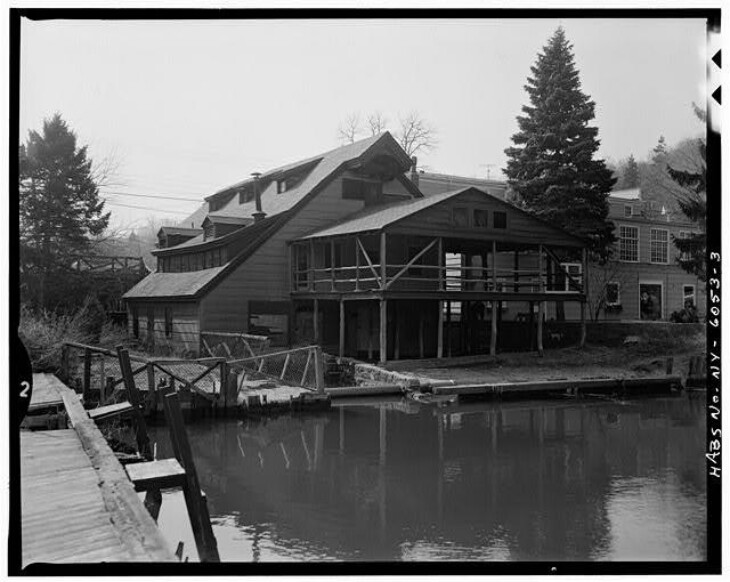
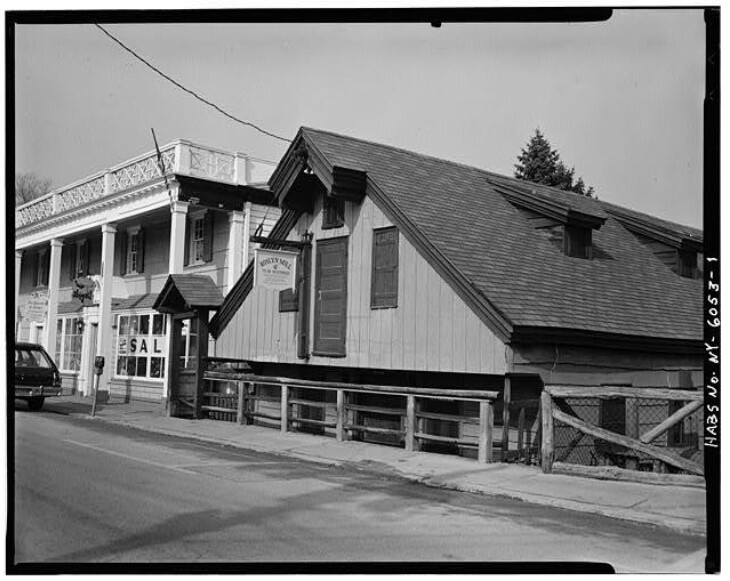
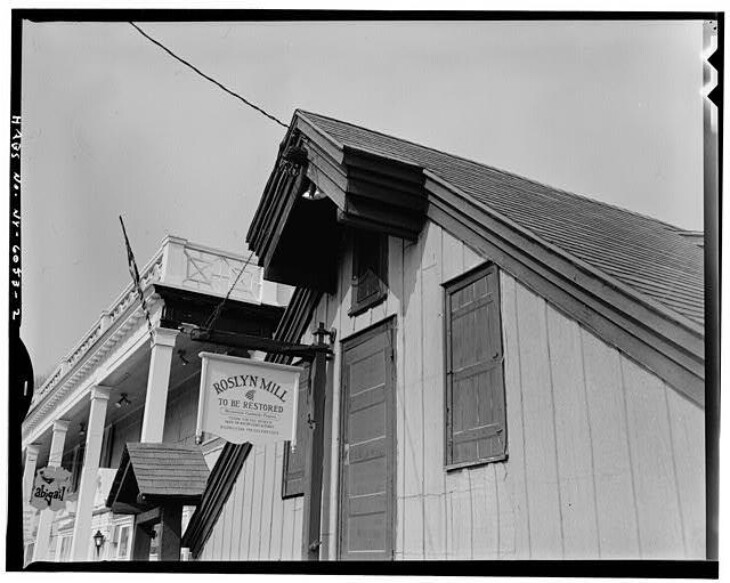
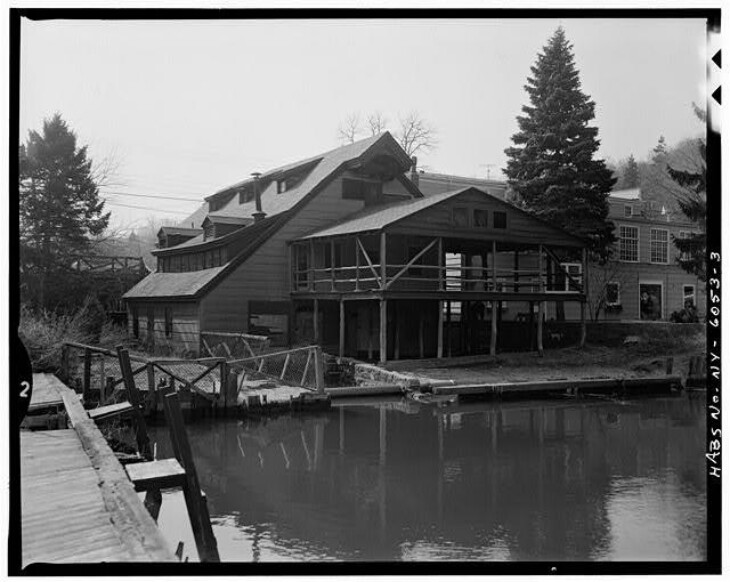
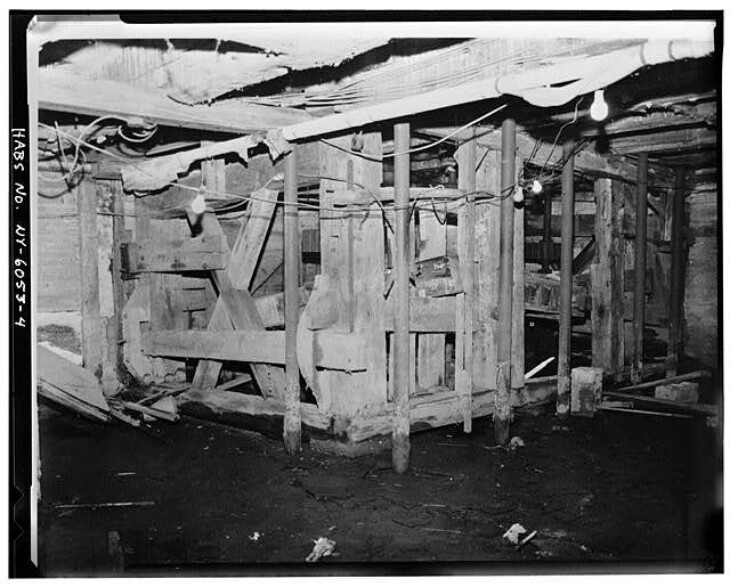
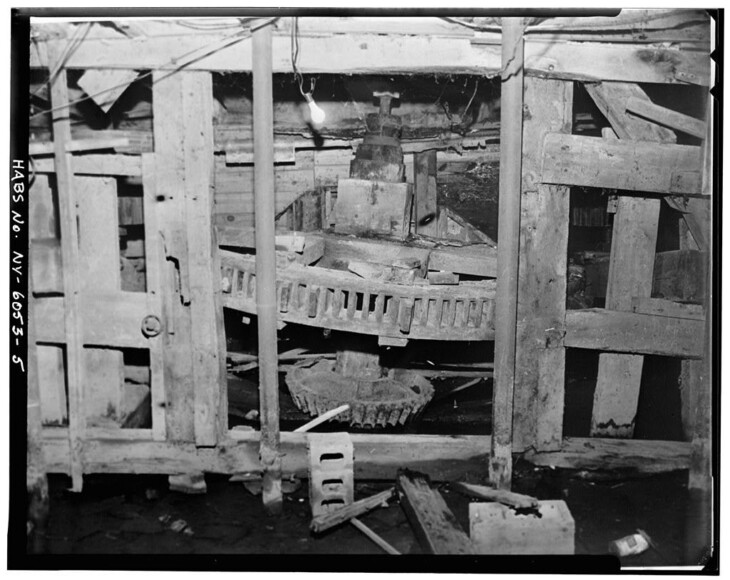
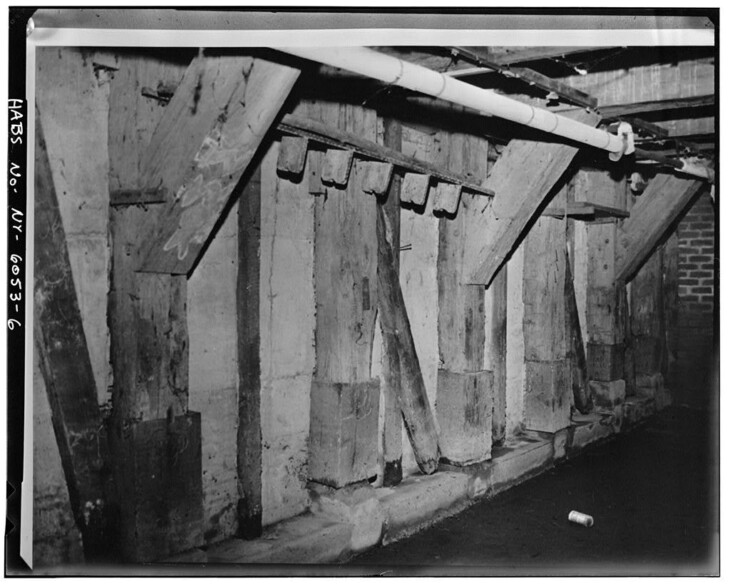
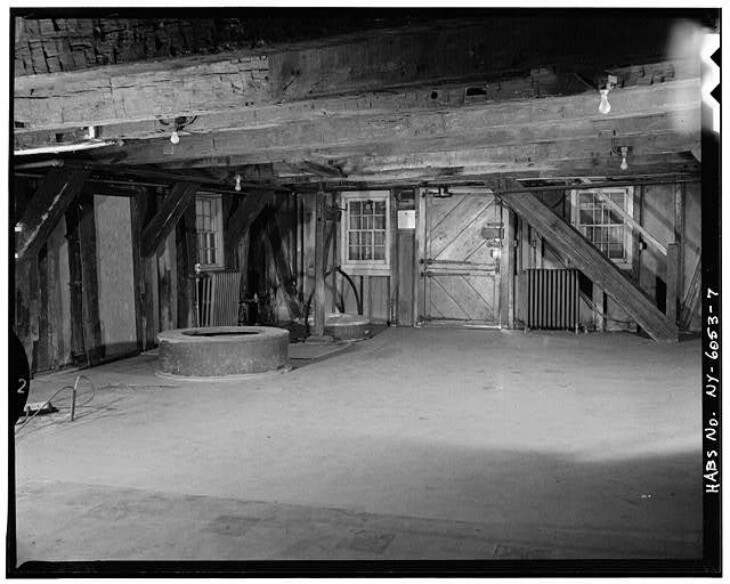
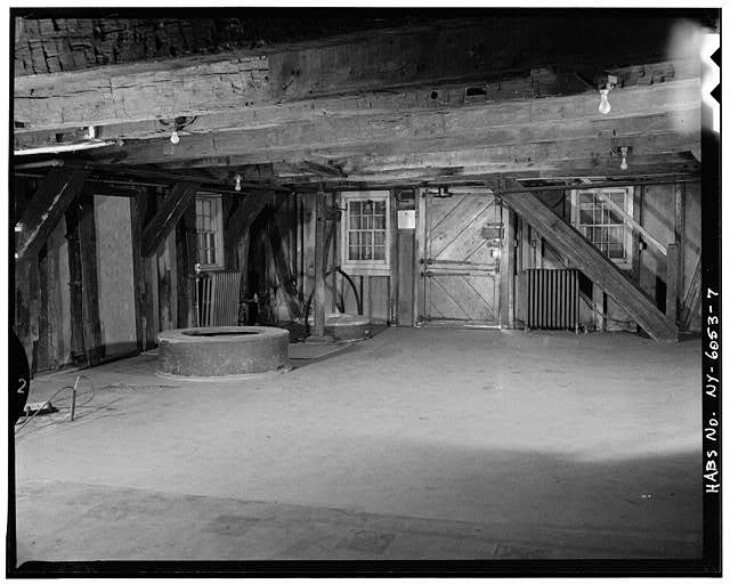
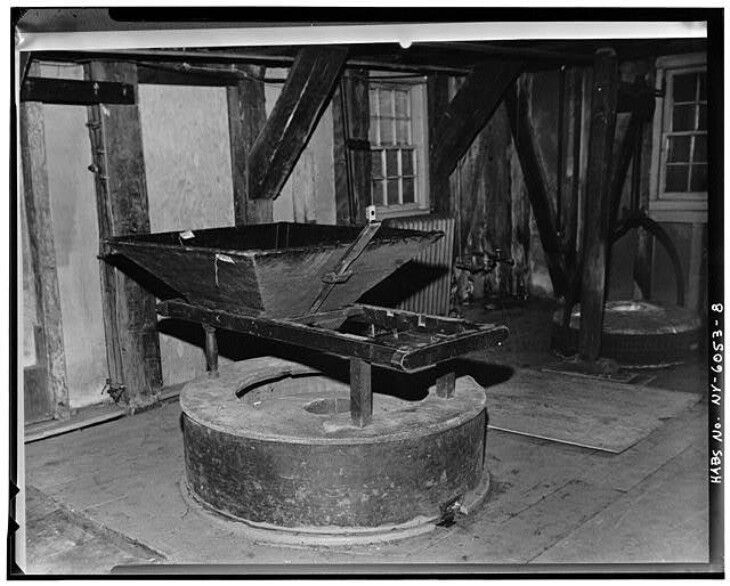
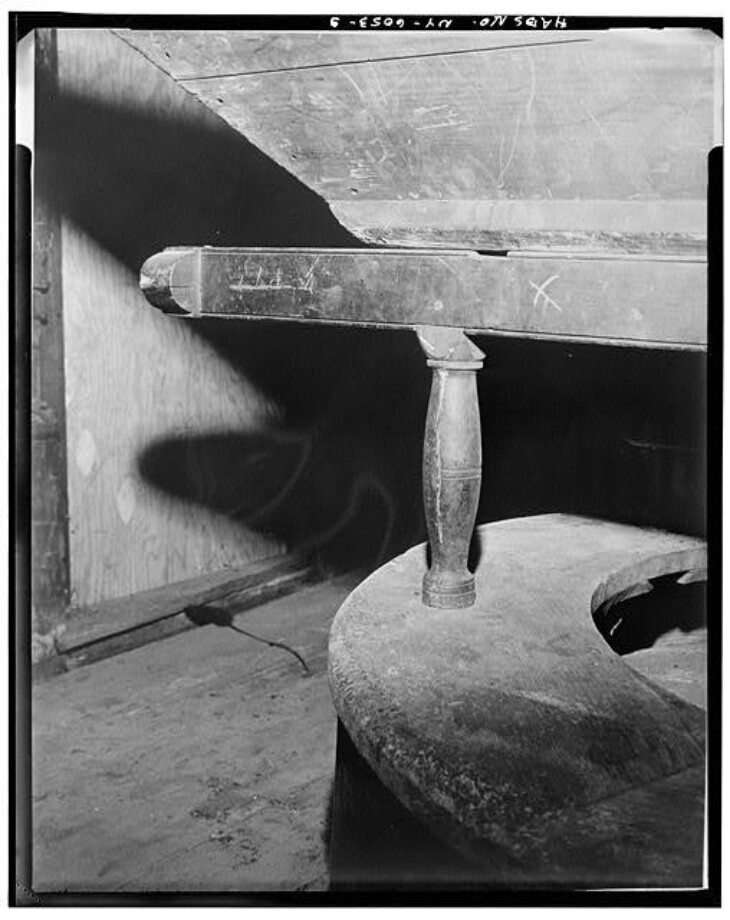
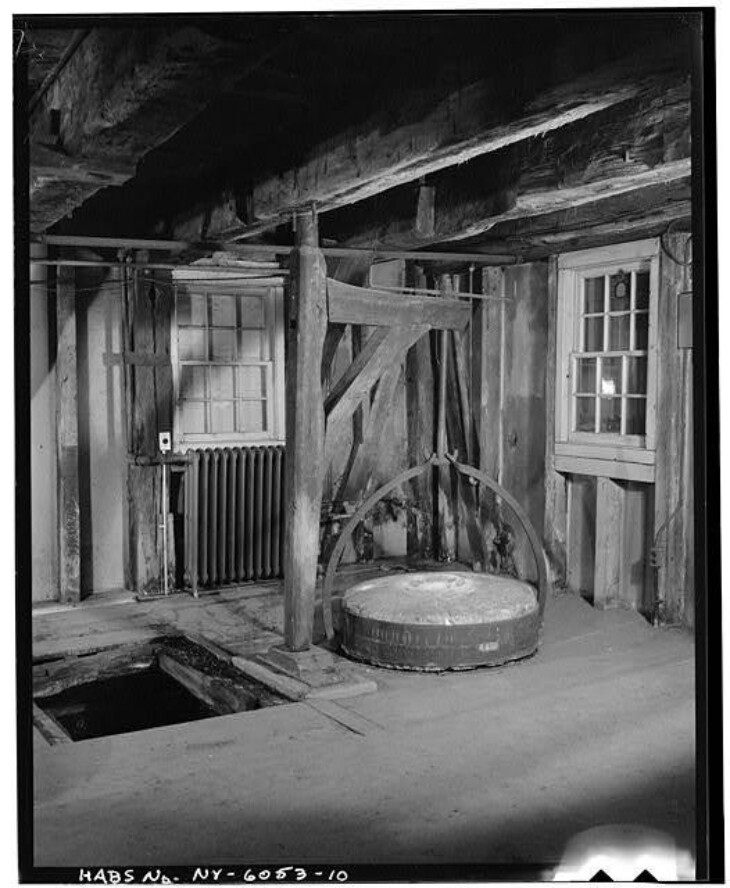
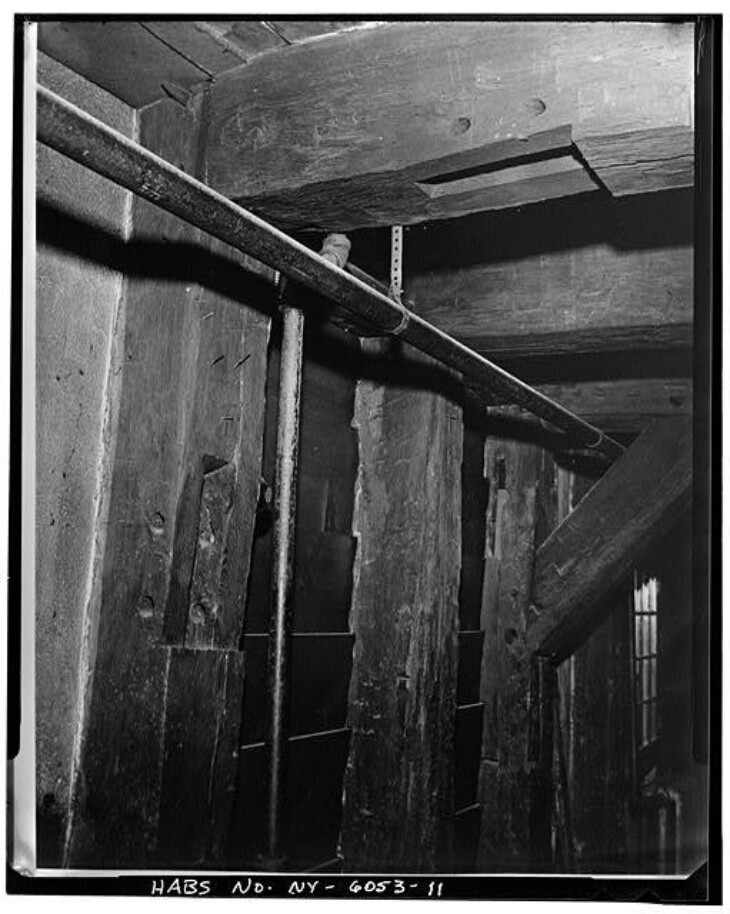
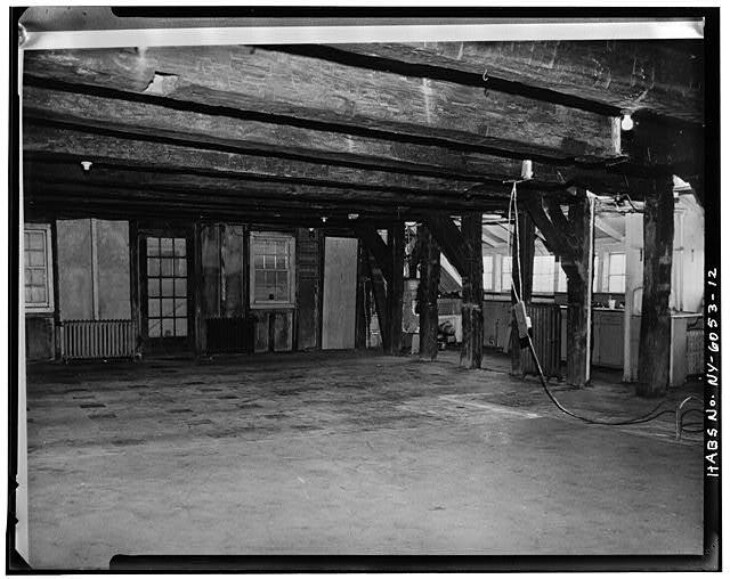
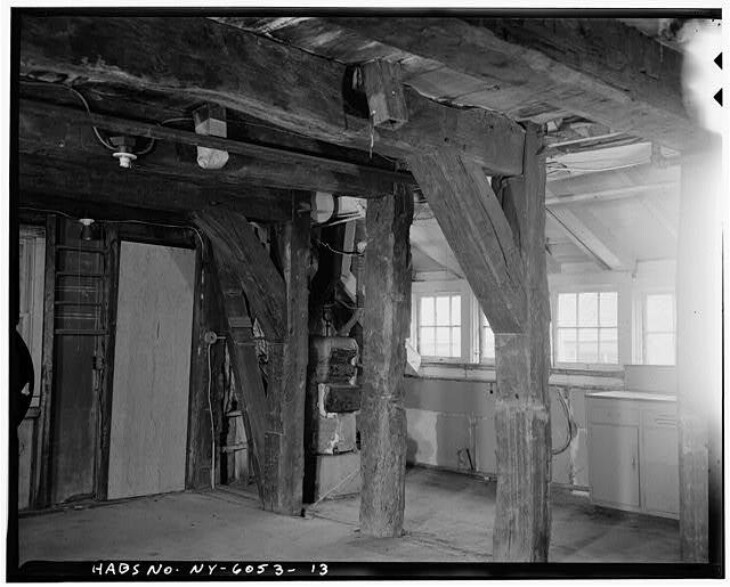
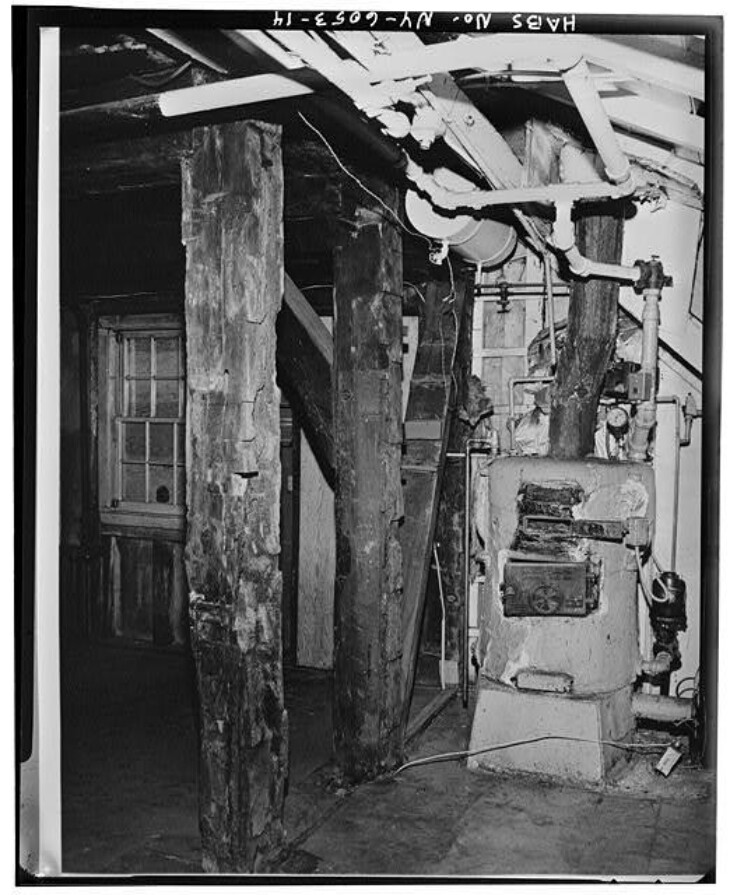
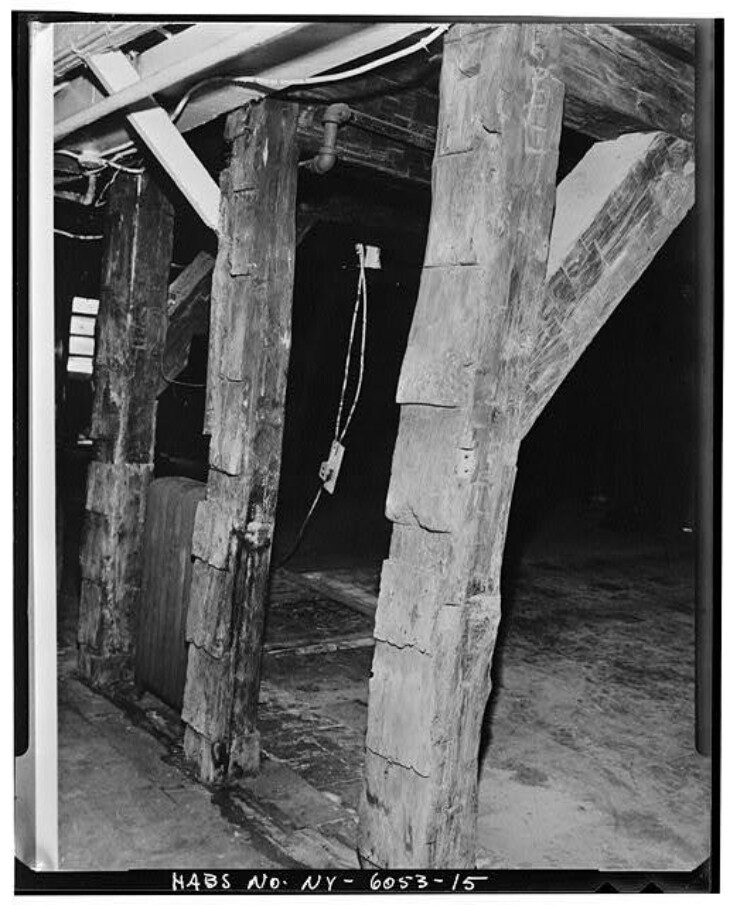
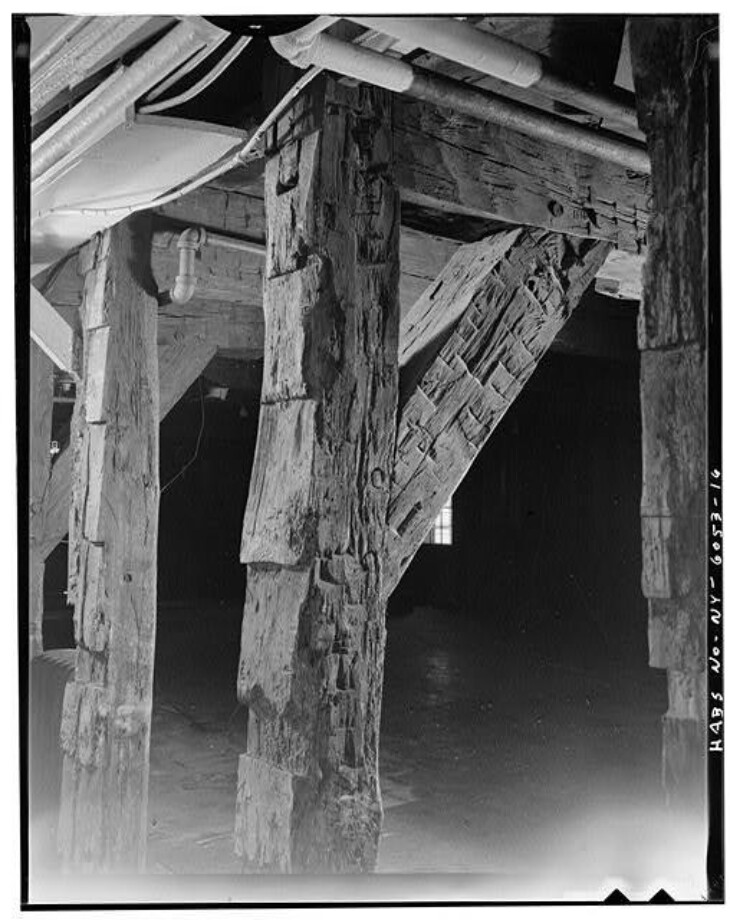
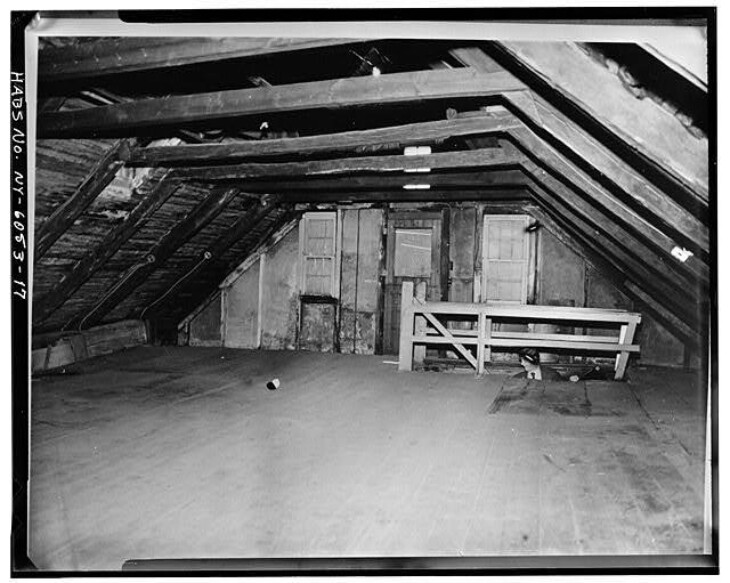
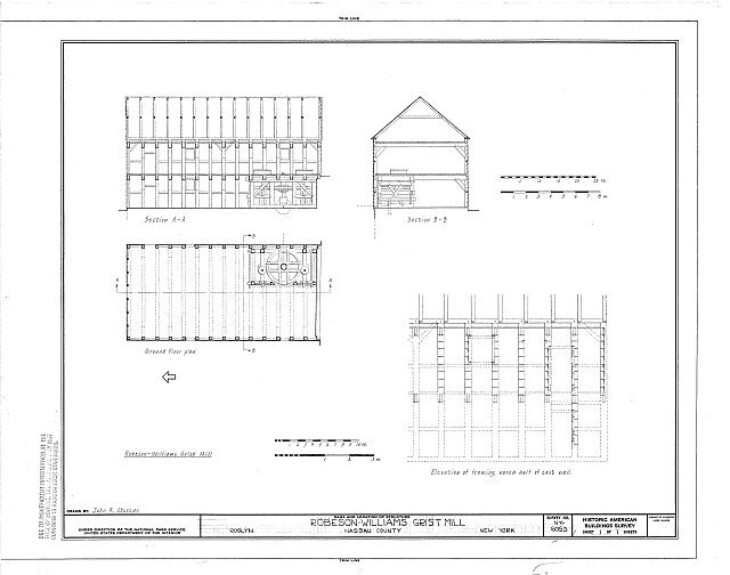
As part of the Roslyn Grist Mill’s long preservation history, the building was documented in the mid-1970s through the Historic American Buildings Survey (HABS), a federal program administered by the National Park Service and archived at the Library of Congress. This effort created a permanent record of the Mill’s architecture and construction at a moment in time, decades before the current restoration began.
Established in the 1930s, HABS, along with the Historic American Engineering Record (HAER), was designed to systematically document the nation’s most significant historic structures and engineering works. Through large-format photography, measured architectural drawings, and written historical reports, the program preserves detailed records that continue to support research, education, and preservation nationwide.
Around 1976, the Roslyn Grist Mill was photographed and recorded as part of this program. The measured architectural drawings were prepared by John R. Stevens, a contributor to the HABS documentation effort. His drawings carefully capture the Mill’s form, construction methods, and historic fabric, providing an invaluable snapshot of the building as it existed in the 1970s.
Today, these HABS/HAER materials remain an important resource for understanding the Mill’s evolution. They offer critical insight into original materials, proportions, and construction techniques and continue to inform the careful, historically grounded restoration work underway today.
Looking back at this documentation underscores the foresight of earlier preservation efforts and highlights the importance of recording historic structures for future generations. The Roslyn Grist Mill’s HABS record stands as a lasting testament to the building’s significance and the role documentation plays in responsible preservation.
0 Comments