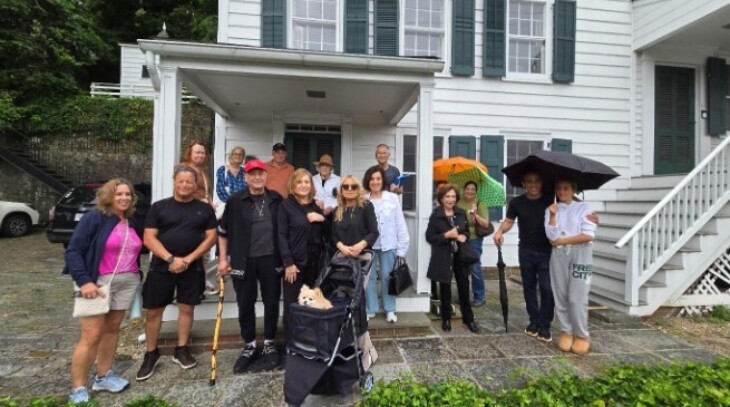
Morning and Afternoon groups attending the Roslyn walking tours. Photographs: Florence Westergard.
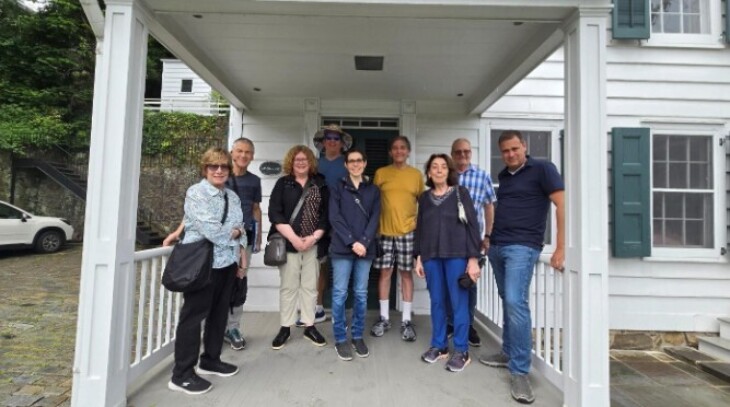
Rain didn’t stop history lovers on Saturday, June 7, 2025, as the Roslyn Landmark Society hosted two special walking tours through the heart of Roslyn Village. Led by longtime trustee and architect Craig Westergard, the tours offered a rich exploration of the village’s early industry, distinctive homes, and the families who helped shape Roslyn’s story.
Roslyn Landmark Society Executive Director, Jaime Karbowiak, and Project Director, Jennifer Lister, welcomed attendees and highlighted ongoing preservation efforts, including work at the Roslyn Grist Mill and the Van Nostrand-Starkins House.
“Our mission is to preserve, protect, and serve the integrity of the Village of Roslyn,” said Jennifer. “That’s exactly what we do through tours like this—thanks to our board, volunteers, and supporters.”
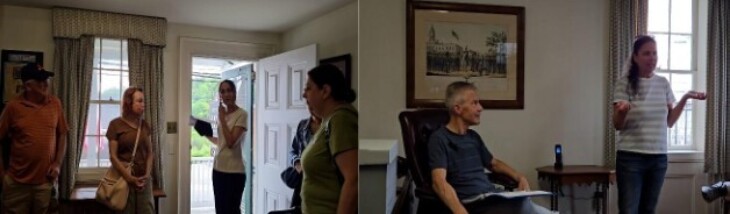
Jaime Karbowiak, Executive Director, and Jennifer Lister, Project Director of the Society welcomed guests. Photographs: Florence Westergard.
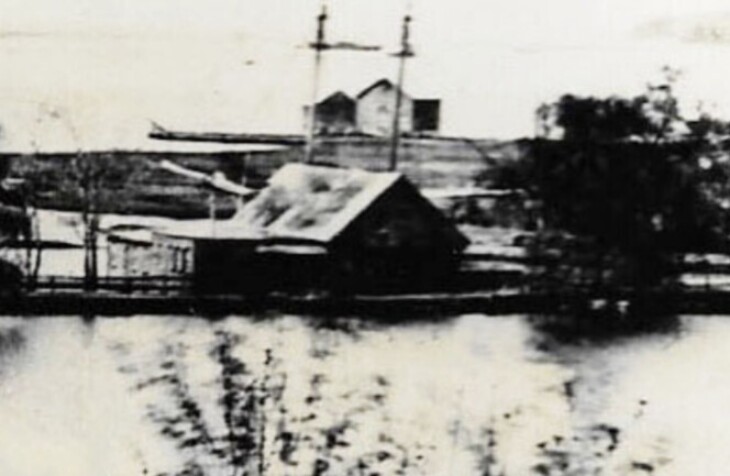
The old gristmill. Photograph: Roslyn Landmark Society.
From Swamp to Settlement
Craig began with Roslyn’s early 18th-century origins—once a mosquito-ridden swamp transformed by dams and drainage into a working harbor. Between 1698 and 1709, John Robeson (later Robinson) built the first gristmill. At various times, Roslyn operated a total of four mills: a gristmill, a paper mill, a sawmill, and a silk mill. By the mid-1700s, the village had become a coastal trade hub—until the Revolutionary War paused its growth.
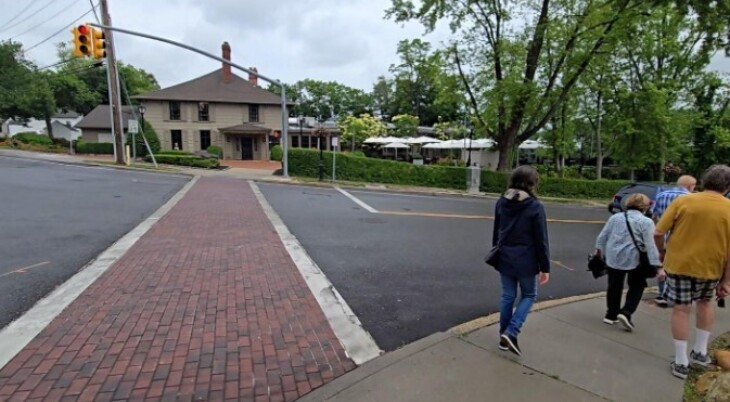
Pine-Onderdonk-Bogart House (Hendrick's Tavern). Photograph Florence Westergard.
Architecture and Industry Evolve
By the early 1800s, wealth from milling and coastal trade gave rise to grander homes like the Onderdonk House, now Hendrick’s Tavern and the Valentine House. With the arrival of steamboats and the Long Island Railroad, Roslyn grew into a commuter suburb. Craig traced the village’s stylistic evolution—from John Wood’s Greek Revival designs to later works by architects Calvert Vaux and Stanford White.
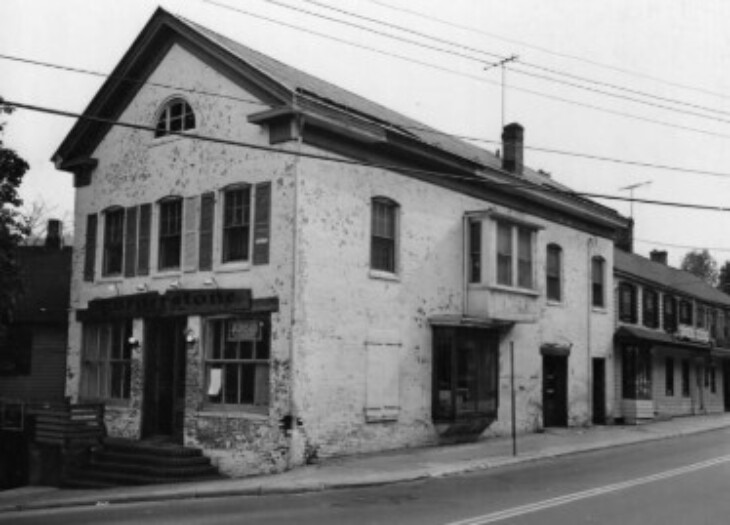
William M. Valentine store was destroyed by fire in 2001. Photograph: Roslyn Landmark Society.
Founders, Builders, and Local Legends
Guests heard stories of Roslyn’s early visionaries:
Hendrick Onderdonk, owner of both the grist and paper mills, hosted President George Washington in 1790.
William M. Valentine, prominent merchant and paper mill owner, built Roslyn’s first brick store.
The Hicks family, long associated with civic life, operated multiple businesses from lumber to pharmaceuticals.
Henry Eastman, lawyer and founder of Roslyn Savings Bank, left a legacy in at least three surviving buildings.
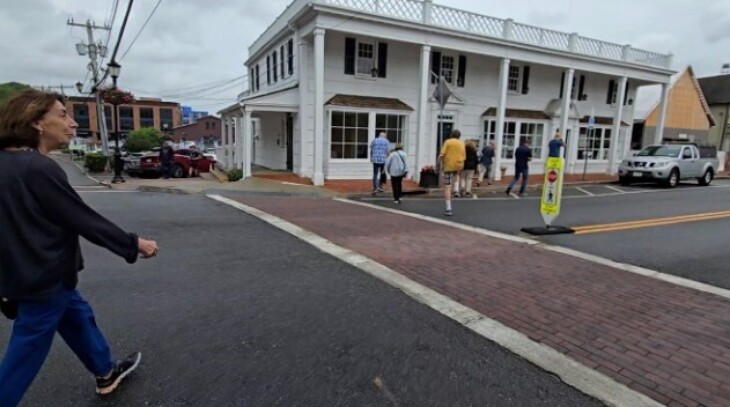
Hicks Lumber Company store. Photograph: Florence Westergard.
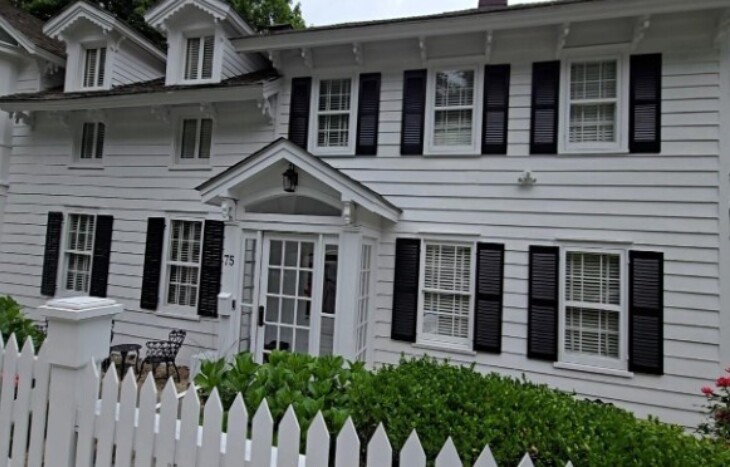
Henry Eastman House. Photograph: Florence Westergard.
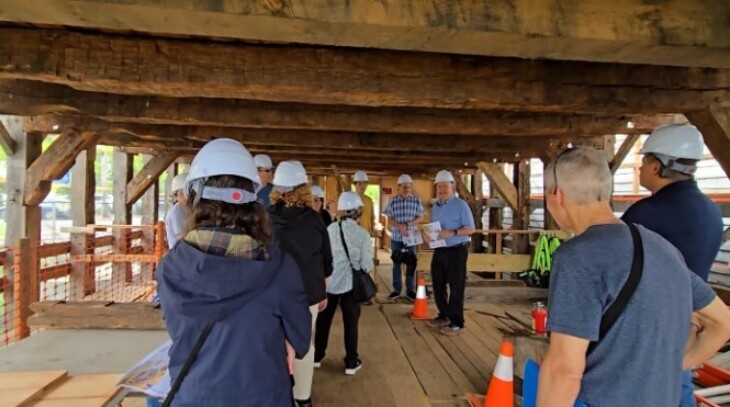
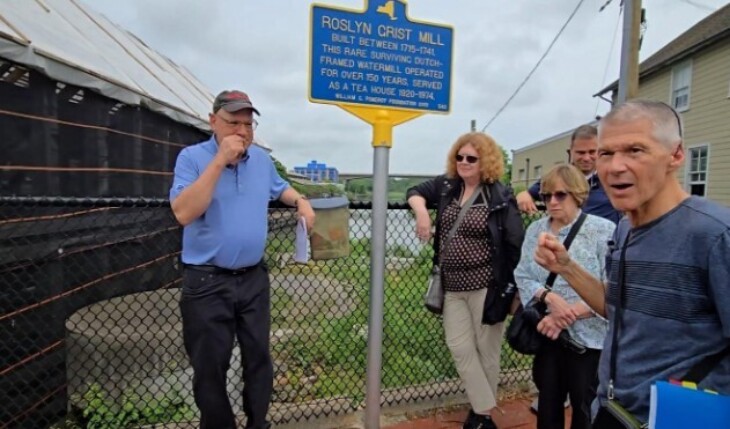
At the Gristmill. Photographs: Florence Westergard.
Inside the Roslyn Grist Mill
A highlight was an exclusive look inside the Roslyn Grist Mill, a rare Dutch-framed structure with original 18th-century timber framing. Guided by Howard Kroplick, Co-President of the Roslyn Landmark Society, visitors viewed the mill’s mortise-and-tenon joinery and heard the story of the “message in a bottle” left in the concrete in 1916 by workers and uncovered during the renovation.
“You can’t restore a 300-year-old building by selling cupcakes and t-shirts,” said Craig. “It takes time, vision, and serious support.”
To date, more than $7 million has been raised through grants and private donations.
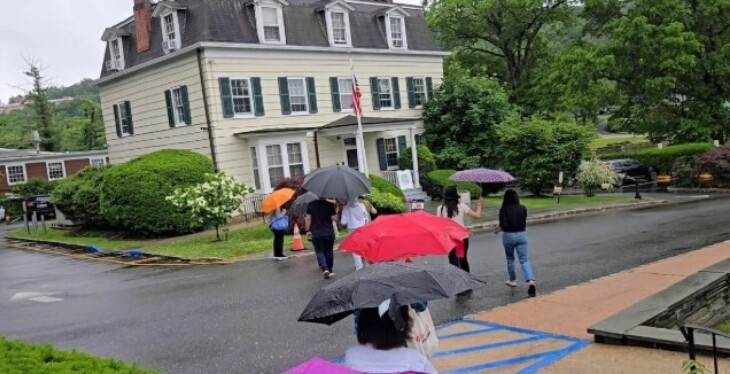
William M. Valentine House- Photograph: Florence Westergard.
A Living Village
From Victorian homes to Main Street storefronts, the tour showed how Roslyn continues to evolve. Highlights included:
The Valentine House was moved in the 1960s to allow for the Bryant Library’s expansion.
The site of the former National Lumber Company, now home to a replica barn.
The original Presbyterian Church on East Broadway, now a private residence.
Despite the weather, guests enjoyed every stop—including Gerry Park, where Craig reflected on Roslyn’s transformation and the pivotal role Roger and Peggy Gerry played in preserving the village’s historic character.
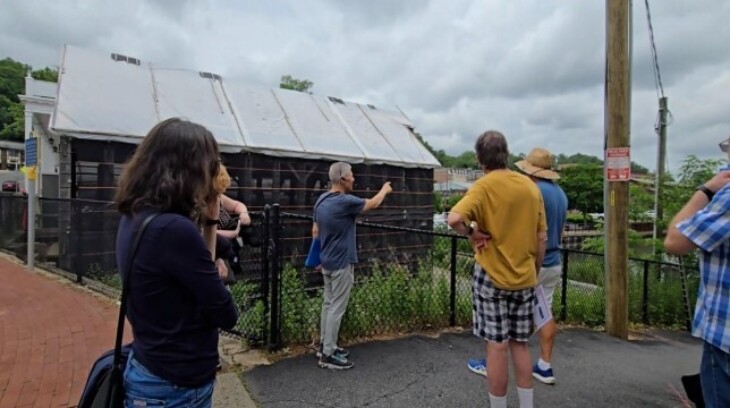
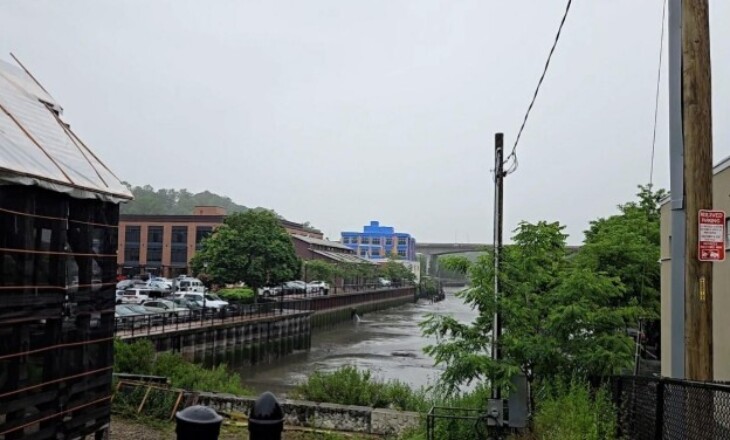
Site of the old Lumber Yard Company. Photographs: Florence Westergard.
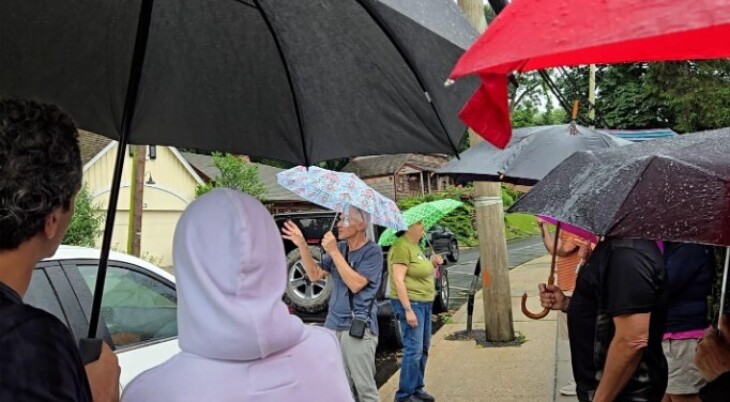
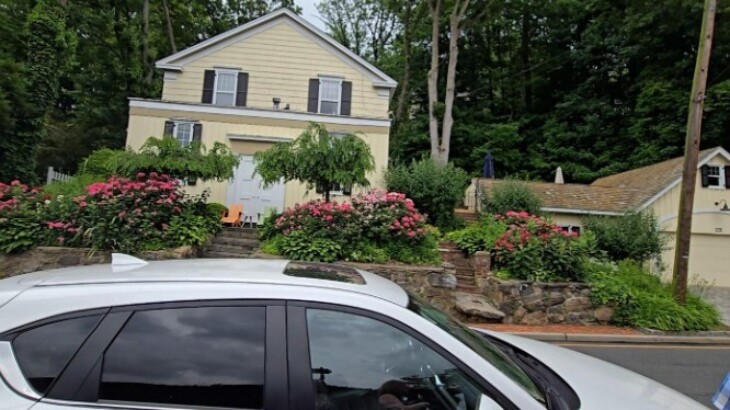
The original Presbyterian church on East Broadway. Photographs: Florence Westergard.
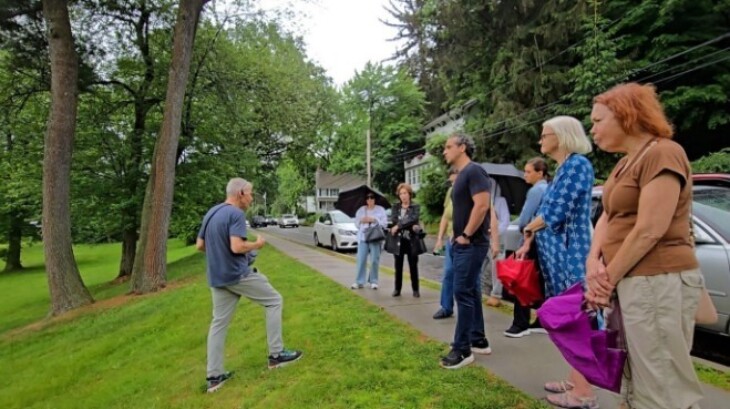
Near the Gerry Park. Photograph: Florence Westergard.
Thank You for Walking with Us
“It’s been a privilege to share Roslyn’s history for so many years—and to see how much people still care about preserving it.” —Craig Westergard
Thanks to Craig, and to the many volunteers and donors who share their time and talents, Roslyn’s story continues to be told with care and passion. A video of the walking tour will be available in the coming weeks.
It truly was a walk-through time, guided by people who understand the soul of Roslyn.
Want to Support Our Work?
Visit roslynlandmarks.org and RoslynLegacy.com to learn more about:
Roslyn Grist Mill and Mackay Estate Gate Lodge restoration projects
We hope to see you on our next journey through Roslyn’s remarkable past.
0 Comments