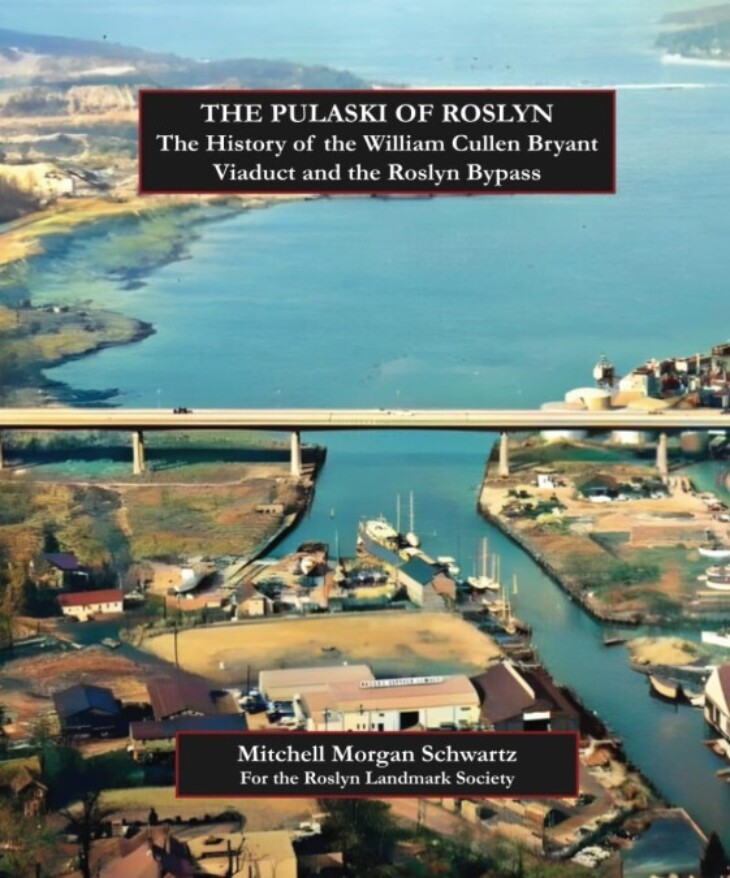
ROSLYN LANDMARK SOCIETY PUBLISHES & RELEASES BOOK ON ROSLYN VIADUCT
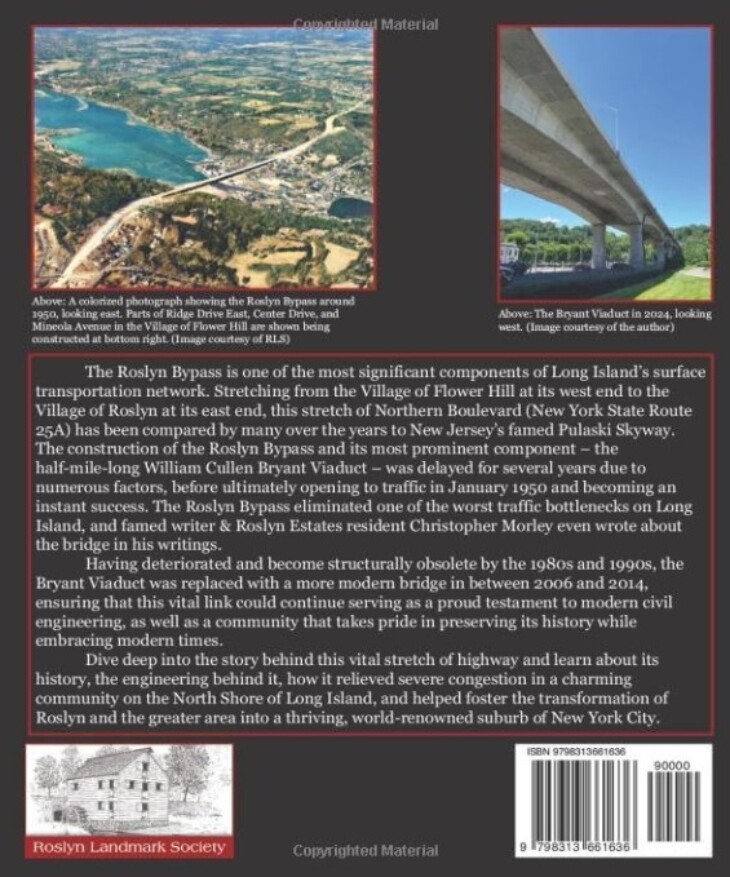
The Roslyn Landmark Society recently published and released a 62-page book written by its co-vice president, Mitchell Schwartz, on the complete history of the William Cullen Bryant Viaduct and Roslyn Bypass – one of the most famous and prominent structures in both the Roslyn community and on Long Island. All royalty proceeds from sales are being donated to support the Society and its many efforts, projects, and programs.
Schwartz's book, The Pulaski of Roslyn: The History of the William Cullen Bryant Viaduct & the Roslyn Bypass, is the first ever written specifically on the history, planning, and engineering of this highway and its half-mile-long bridge. It provides a comprehensive analysis about the highway’s history, starting from when rumors first started spreading of its planning in the 1920s until the completion of the viaduct replacement project and renaming from the Roslyn Viaduct to the William Cullen Bryant Viaduct in the 2010s.
It answers in great detail how and why the highway and its famed viaduct were originally built, why the original viaduct was replaced with the current bridge, and how the highway’s construction forever changed the Roslyn area and the region's transportation network. The book’s name reflects how the creation of this critical stretch of Route 25A has been compared by many to the creation of the Pulaski Skyway in New Jersey due to both structures' similar purposes, designs, and histories.
Schwartz's book chronicles early proposals and the widespread opposition which local residents and businesses initially expressed against building the highway, plus how the worsening congestion through Roslyn eventually led the project's initial foes to become some of its staunchest supporters. It thoroughly analyzes the planning, engineering, and construction of the highway, challenges faced in completing the massive public works project, and how it improved regional transportation and alleviated gridlock through the town.
The Pulaski of Roslyn also details the highway’s success, major developments, and projects during the following decades as well as the eventual replacement of the original Bryant Viaduct. It includes a detailed analysis of the monumental, historic project's planning, development, and construction, along with the 2014 renaming of the bridge in honor of famed Roslyn writer and resident William Cullen Bryant.
Starting on its west end at Middle Neck Road in Flower Hill and ending just east of Bryant Avenue on the eastern end of Roslyn Village, the Roslyn Bypass is one of the most iconic stretches of New York State Route 25A and a critical piece of Long Island’s surface transportation network. It opened in 1950, eliminating the need for through traffic to meander through the community, with Route 25A being realigned onto it while the original alignment, now known as Old Northern Boulevard, was given to Nassau County by New York State to become a county-maintained highway.
Today, the Roslyn Bypass continues to serve the transportation needs of the Roslyn community and greater region, carrying tens of thousands of vehicles each day over Hempstead Harbor – traffic which would otherwise be forced to wind through downtown Roslyn and bring the community to a crippling standstill.
Schwartz dedicates this book to the Roslyn Landmark Society, the Bryant Library, Roslyn School District, Long Island Studies Institute at Hofstra University, New York State Department of Transportation, and the Villages of Flower Hill and Roslyn – the two villages through which the Bryant Viaduct runs. He also dedicates it to his father, Alan Schwartz, who would take him on weekend morning rides through Roslyn as a child to watch the current bridge being built.
The Pulaski of Roslyn is now available for purchase on Amazon, with copies selling for $14.50. All author royalties from purchases go to support the Roslyn Landmark Society and its many programs, projects, and efforts. A draft version, written this past July, may also be viewed for free on the Roslyn Landmark Society’s website here.
2 Comments
Hi Harrison. The Roslyn Landmark Society also has copies of the book for sale at our headquarters building located at 36 Main Street in Roslyn. Please call us at 516-625-4363 for information on how to purchase one. Thank you!
Great! How can we purchase it if we don't use Amazon?